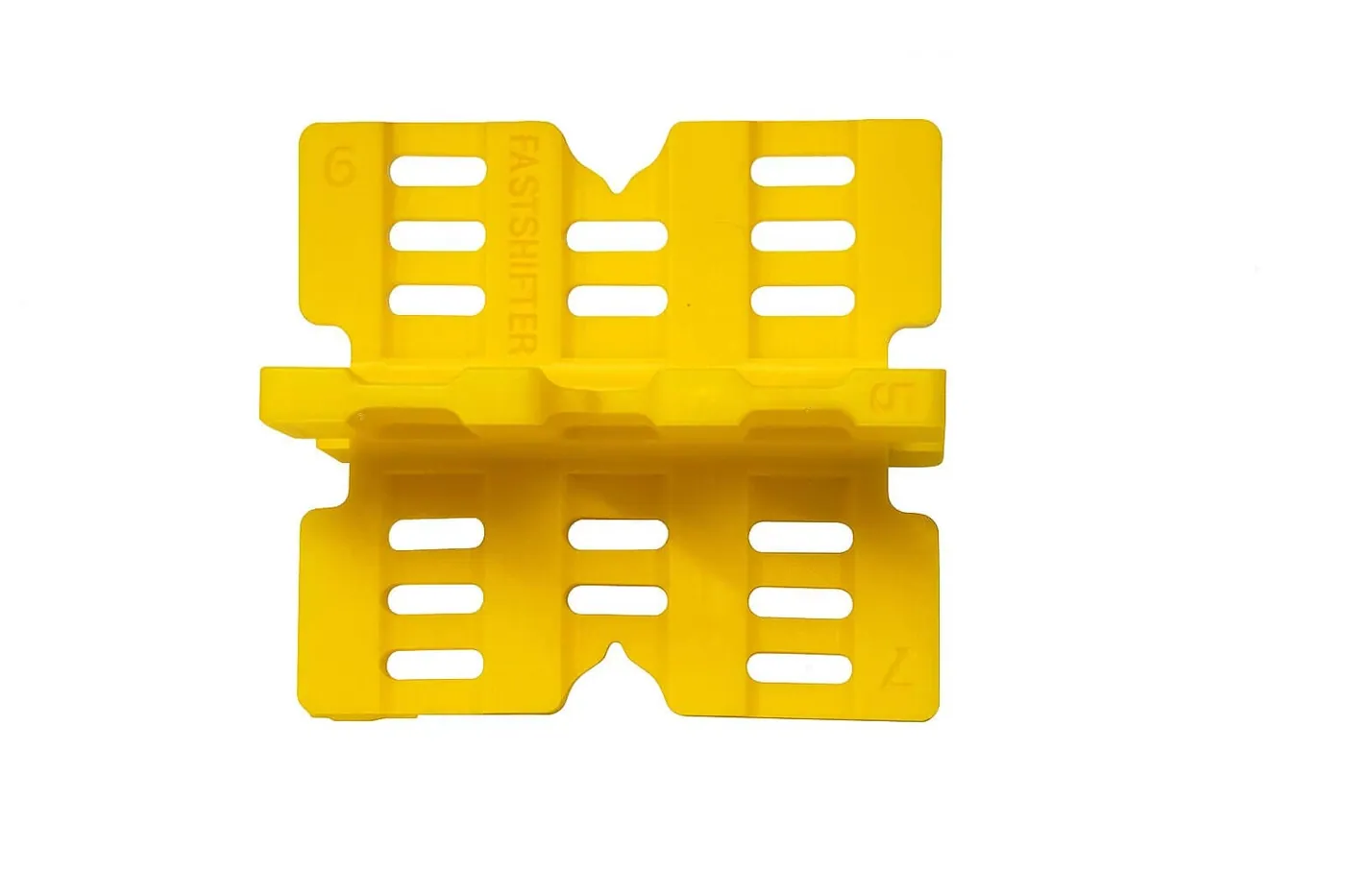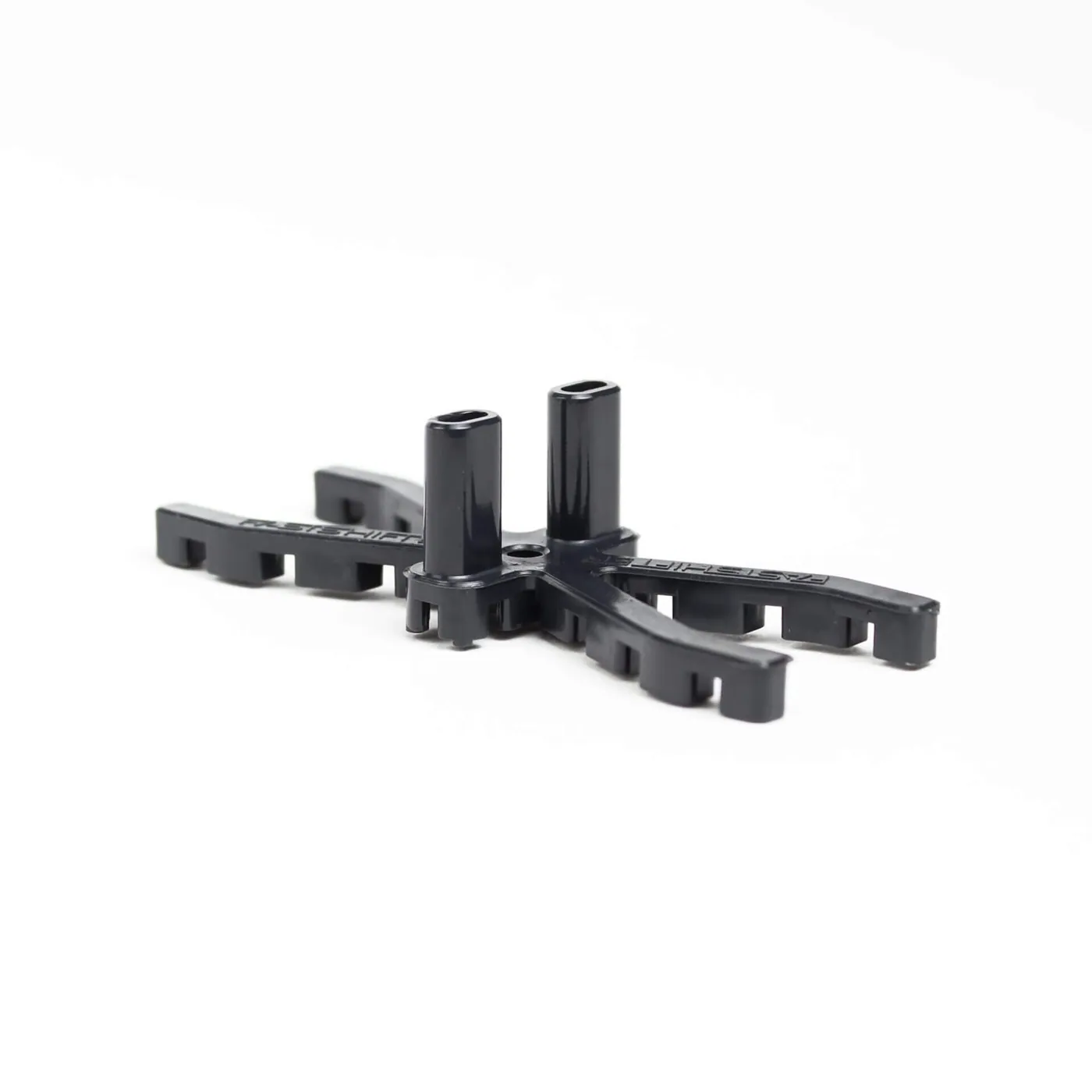
Fastshifter Air Spacer Glass Fibre
Item no. 223084-1Glass-fibre reinforced spacer pad — lifts the board off the joist, sets an even gap and lets air circulate.
Technical data
| Type | Deck board spacer pad (board-to-joist) |
|---|---|
| Material | Glass-fibre reinforced plastic |
| Function | Ventilation gap, even board spacing, drainage |
| Fixing | Central screw hole |
| Suitable for | Timber, thermally modified and composite decking |
| Available packs | 200 pcs / 350 pcs |
| Brand | Fastshifter |
Fastshifter sells through distributors and dealers. Ask for the price list for your market.
Request trade price →Product details
The Fastshifter Air Spacer Glass Fibre is a universal spacer pad that sits between the deck board and the joist. It lifts the board clear of the frame, sets an even gap and lets air circulate under the board — the three things that decide how long a timber deck actually lasts.
This version is moulded from glass-fibre reinforced plastic, so it carries higher loads and tolerates heat better than the standard pad. That makes it suitable not only for private decks but for commercial projects as well.
Key features
- Glass-fibre reinforced — higher mechanical strength and better heat resistance.
- Built for load — suitable for heavily used and commercial decks.
- Lifts the board off the joist — air circulates, the timber stays drier and lasts longer.
- Moulded teeth — set an even gap between boards, so the deck looks tidy and installation is faster and more accurate.
- Central screw hole — for convenient, firm and stable fixing.
- Hollow pins — let the board expand and contract naturally with temperature, reducing the risk of deformation.
- Better drainage — water runs off and moisture escapes instead of being trapped at the joist.
- No direct contact — separates board from frame, one of the most common rot starting points.
Where it is used
- All types of decking board — timber, thermo-wood and composite.
- Decks where ventilation and drainage under the board matter.
- Commercial and public decks with heavy foot traffic.
- Projects where an even, repeatable gap is required across the whole surface.
FAQ
What does the pad actually change? It removes the flat board-to-joist contact where water sits. With the board lifted, air moves under it and the timber dries out instead of staying damp.
Why the glass-fibre version? The reinforced material takes higher loads and more heat without deforming, which is why it is specified for commercial and intensively used decks.
Do the teeth replace a separate spacer? Yes — the moulded teeth set the gap between boards as you fix them, so the spacing stays consistent without measuring each joint.
Does it allow for board movement? Yes. The hollow pins flex, so boards can expand and contract with temperature without forcing the fixing.