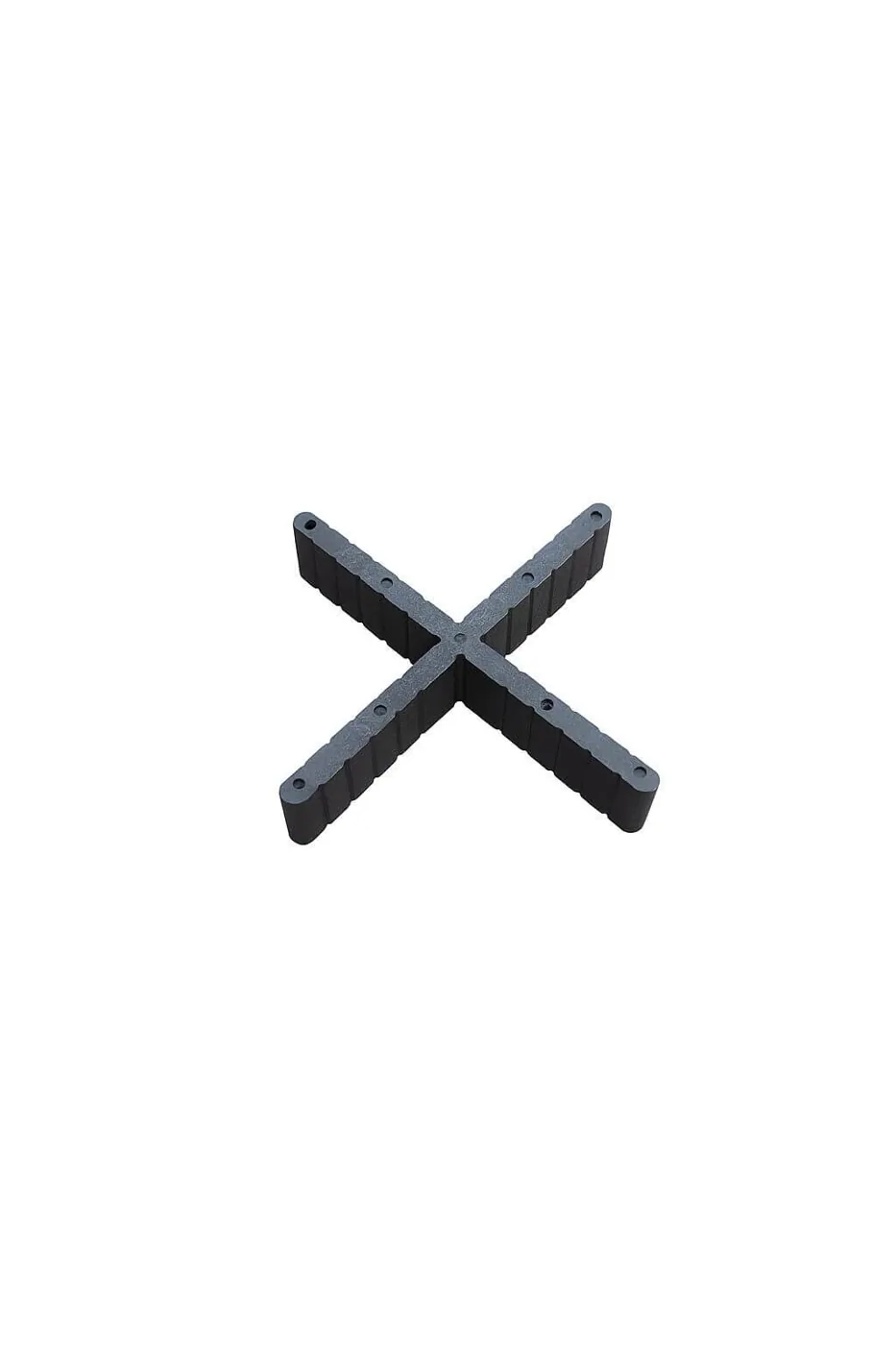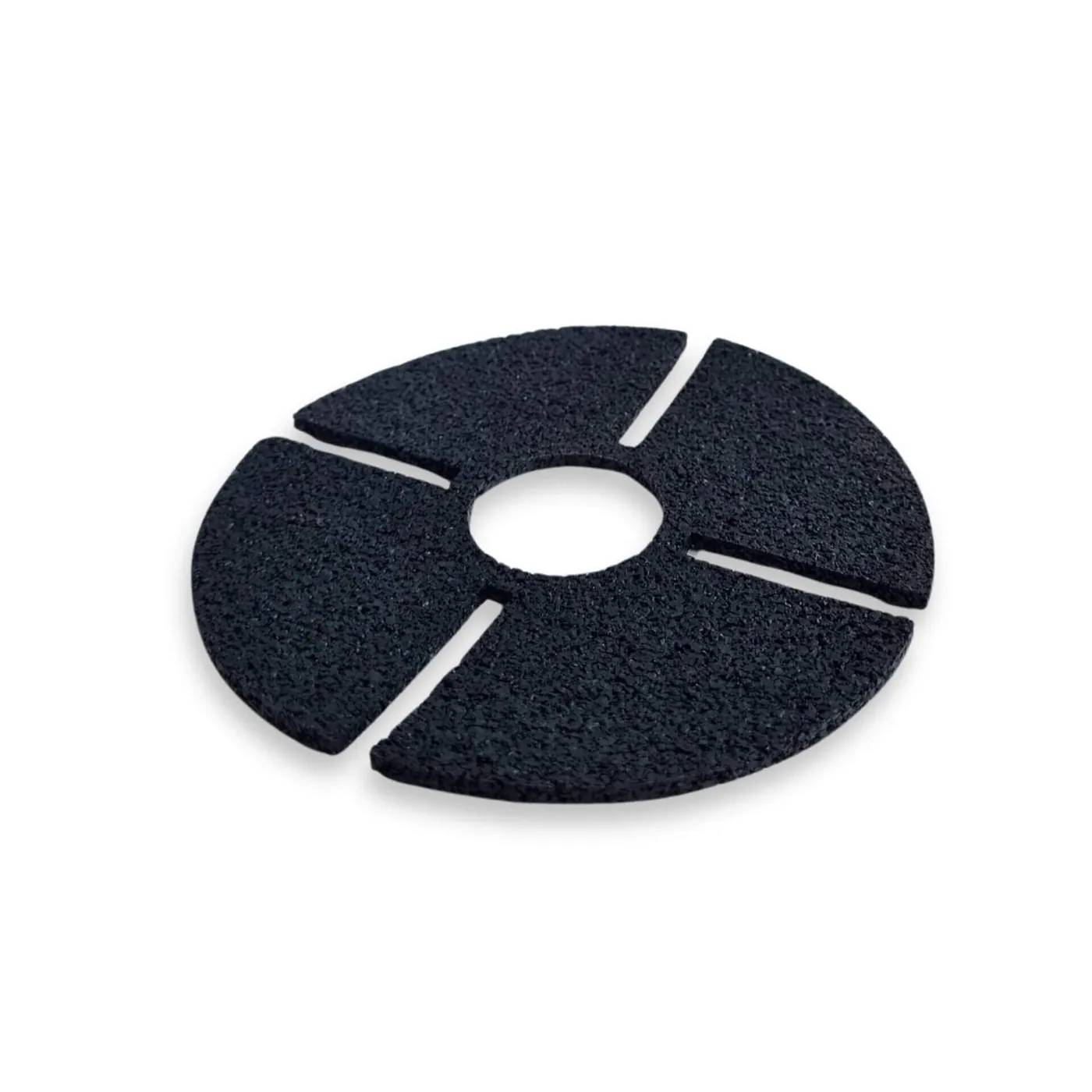
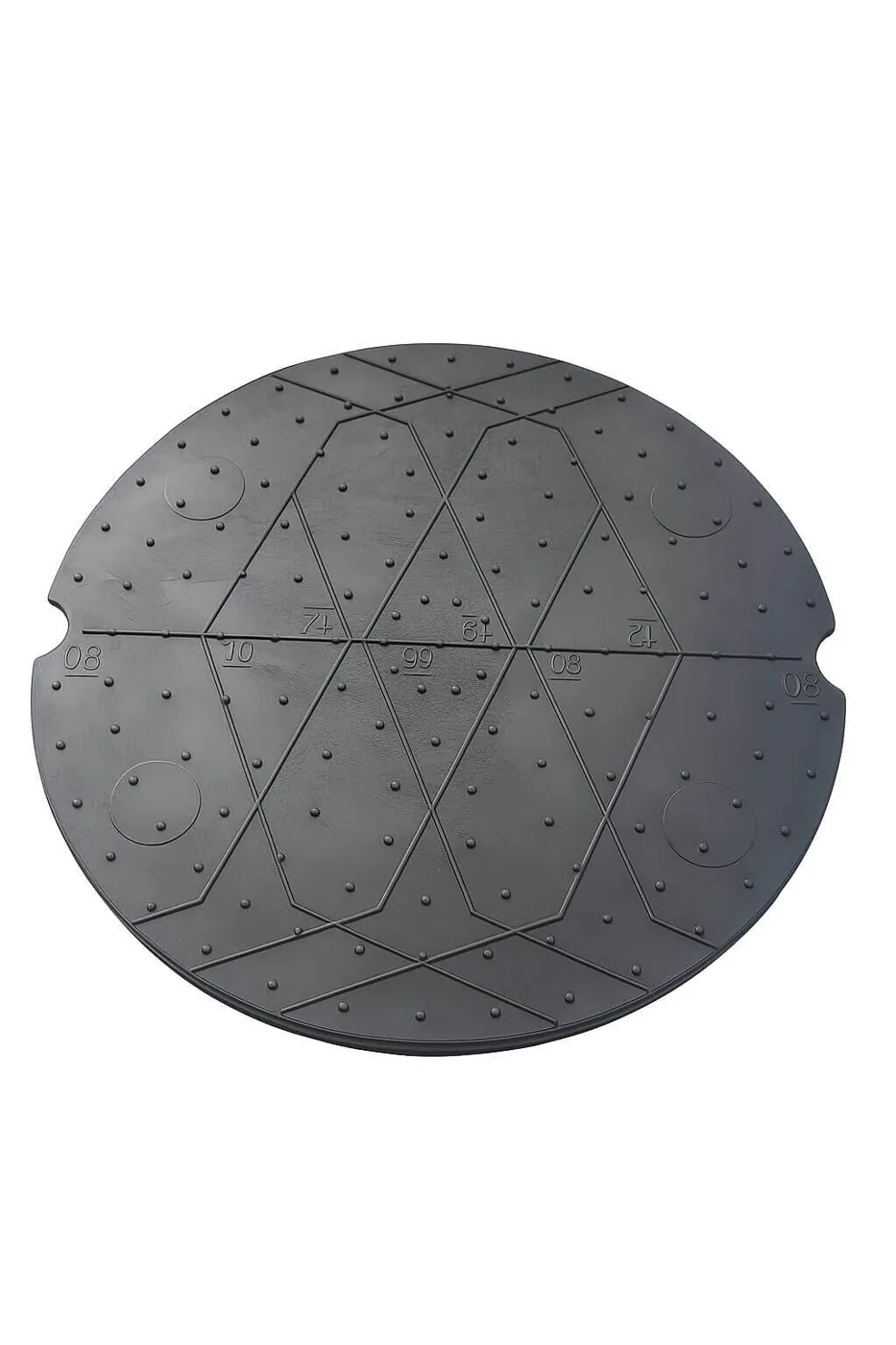
Fastshifter Support Pad 110×110×3 mm SBR
Item no. 00049Support pad for Fastshifter pedestals — spreads load and protects the substrate.
Technical data
| Type | Rubber support pad |
|---|---|
| Dimensions | 110 × 110 × 3 mm |
| Thickness | 3 mm |
| Material | Rubber granulate (SBR) |
| Colour | Black |
| Temperature range | −40 °C to +120 °C |
| Sold as | 1 pcs |
Fastshifter sells through distributors and dealers. Ask for the price list for your market.
Request trade price →Product details
The Fastshifter Support Pad 110 × 110 × 3 mm is a moulded rubber pad made from high-quality rubber granulate. It is placed on top of the pedestal, between the pedestal head and the tile, to absorb friction noise between tile and plastic and to soak up small vibrations.
Rubber pads are stable under heavy load and across extreme temperatures — roughly −40 °C to +120 °C — and they do not rot, so they can stay in a wet build-up permanently. Choosing the right thickness also lets you fine-tune the gap between base and structure.
Key features
- 110 × 110 × 3 mm — 3 mm thick, so it also works as a levelling shim.
- Impact sound insulation — damps footfall noise and vibration.
- Rot-proof — unaffected by standing water and wet substrates.
- Evens out minor irregularities in the base.
- Non-slip and rattle-free, with no sharp edges to cut a membrane.
- Protects the structure below — paving, concrete or roof waterproofing.
- Weather resistant from −40 °C to +120 °C, for outdoor use.
Where it is used
- Under deck joists and bearers to create a ventilated, drained gap.
- Under pedestal bases on concrete, paving and roof membranes.
- Between pedestal head and tile, to stop friction noise.
- As a precise shim where the base is slightly out of level.
- Anywhere footfall noise or vibration needs to be damped.
Using support pads of the correct thickness is the simplest way to keep a deck quiet, dry and off the ground — and it is far cheaper than replacing a rotted substructure later.
More in this range
Fastshifter Pedestal Extension 100mm
Fastshifter Slope Adjuster (universal)
Fastshifter Slope Adjuster (for FT0)