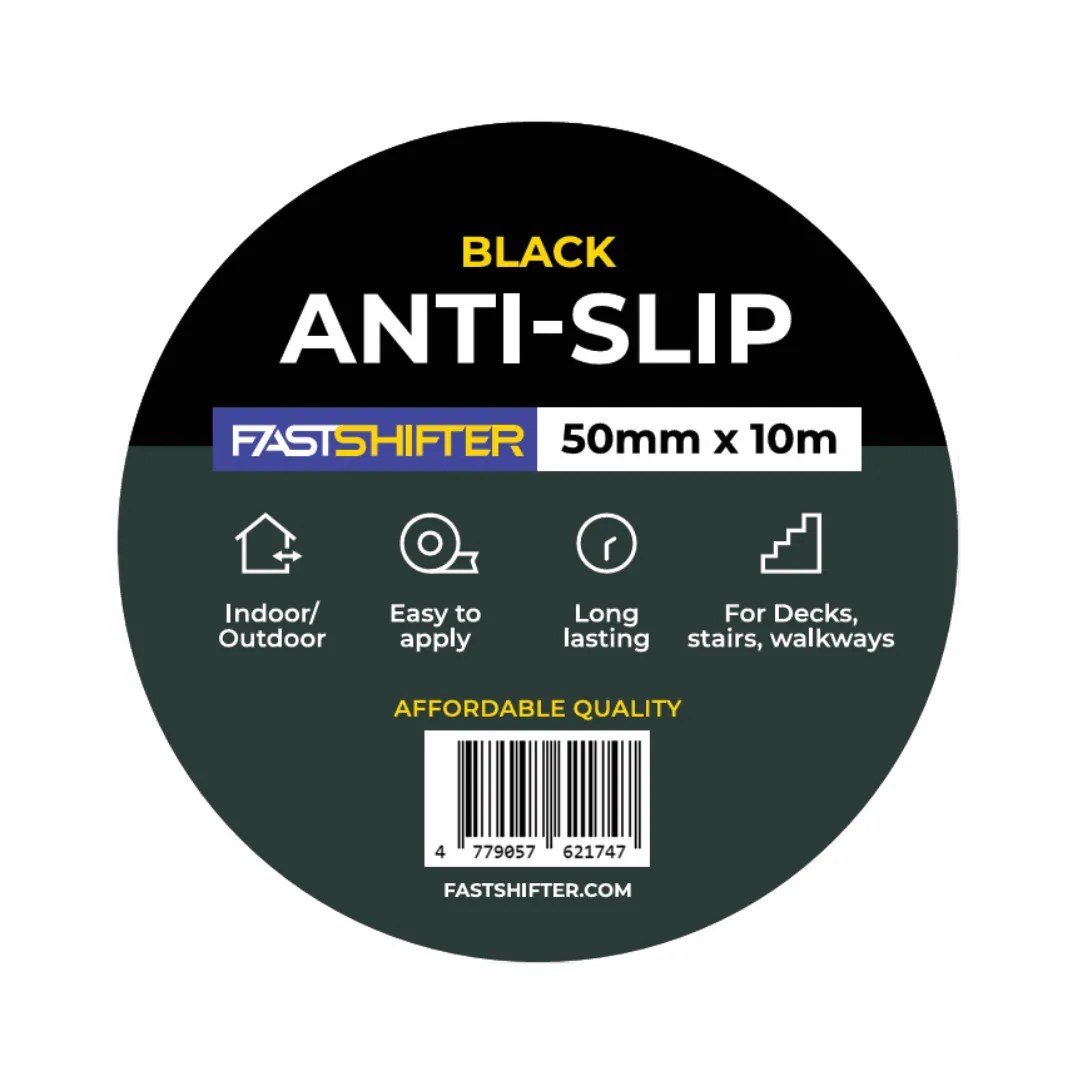
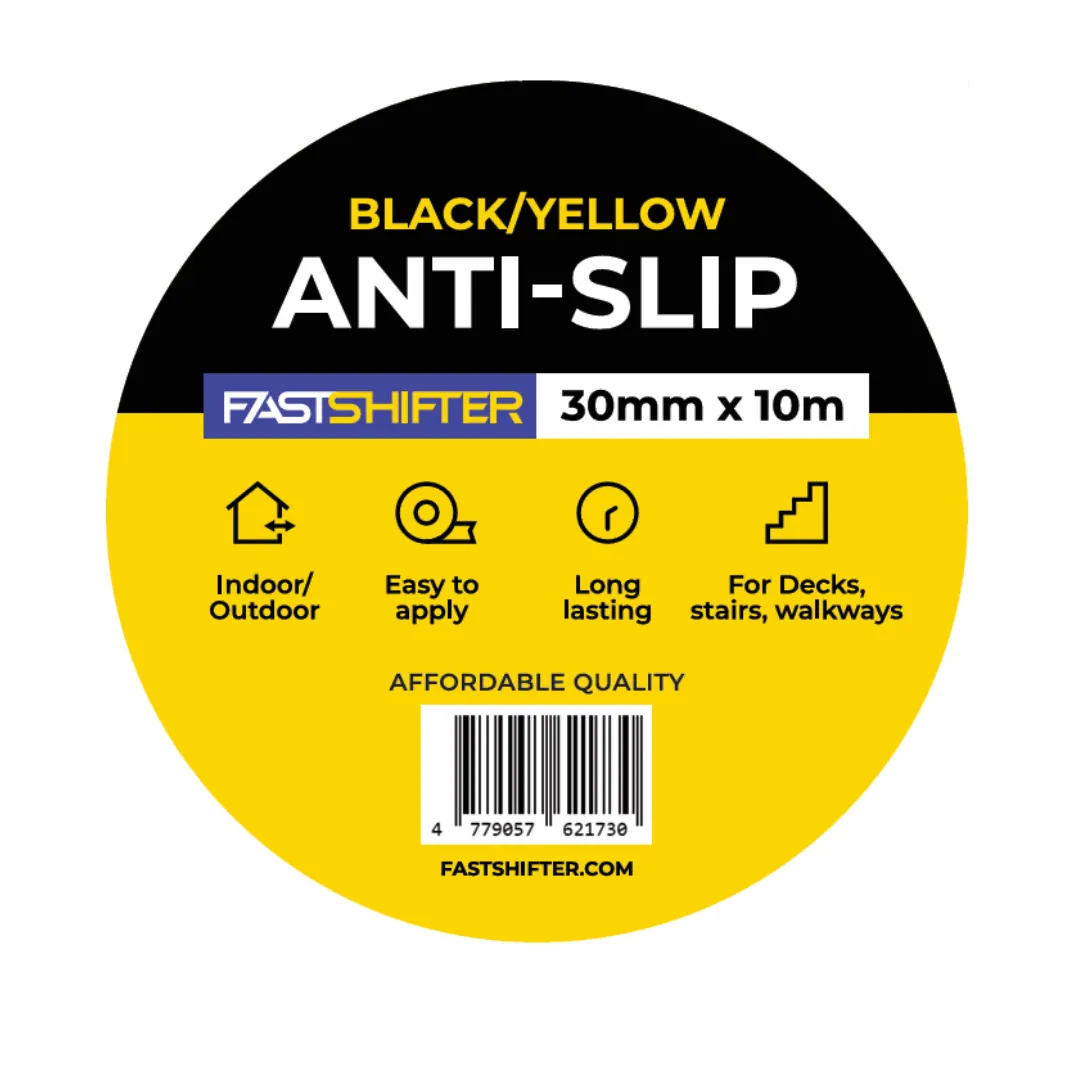
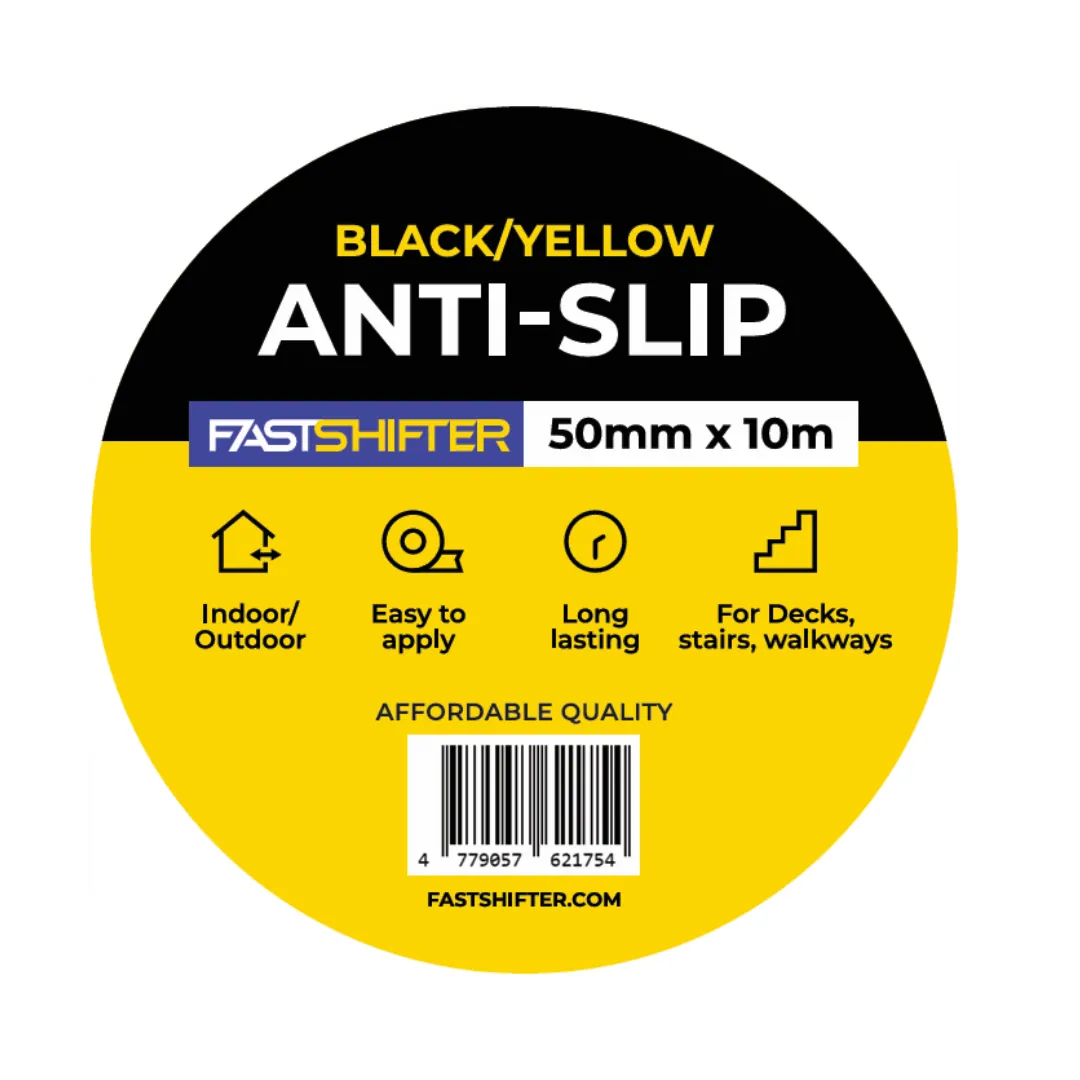
Anti-slip tape adds a gritty, self-adhesive surface where people are most likely to slip: step nosings, ramps, pool surrounds and shaded or north-facing areas. Use black for a discreet look on dark decks and yellow where the edge needs to stand out. Clean and dry the surface first, round off the corners and press the tape down firmly.
Decks are at their most slippery exactly when people use them: after rain, in the shade, around the pool, on the steps down to the garden. Most of the time a good board and regular cleaning are enough. Where they are not, anti-slip tape is the fastest and cheapest fix.
Where decks get slippery
| Area | Why | Fix |
|---|---|---|
| Steps and stair nosings | The foot lands on the edge, often wet | Tape on every tread edge |
| Ramps | Inclined, often in shade | Strips across the ramp at intervals |
| Pool surrounds | Constantly wet, bare feet | Wide strips at entry points and walkways |
| North-facing and shaded decks | Slow drying, algae growth | Clean, ventilate, tape the walking line |
| Commercial and public decks | High traffic, liability | High-visibility tape at level changes; check local rules |
Before taping, deal with the cause where you can: clean off algae, improve ventilation and drainage, and trim back plants that shade the deck.
Choosing the tape
- Width. 50 mm for stair treads, ramps and walkways. 30 mm for narrower edges, or for marking several lines on one tread.
- Colour. Black for a discreet look on dark timber, composite and stone. Yellow where a step or level change must stand out: public steps, ramps, commercial decks.
- Outdoor rating. The tape must be resistant to UV, moisture and frost. Fastshifter anti-slip tape is 0.65 mm thick, improves grip in wet conditions, and is rated for outdoor use through summer and winter. It does not replace clearing ice and snow.
How to apply it so it stays put
- Clean the surface thoroughly. Remove dirt, algae, oil and loose fibres.
- Let it dry completely. Moisture under the tape is the main cause of lifting.
- Apply in mild weather, ideally above about 10 °C. Cold surfaces weaken the initial bond.
- Cut to length and round the corners. Square corners catch feet and start peeling.
- Peel the backing gradually while laying the tape, without stretching it.
- Press down hard along the whole length, with a roller if you have one.
- Keep it a few millimetres from the front edge of a tread so the edge does not catch.
- Let the adhesive settle before heavy use.
A small upsell with a real benefit
For a deck builder, anti-slip tape is a small add-on with a clear benefit for the client, especially for families, older users, rental properties and anything near water. For a dealer it is an impulse item that sits naturally next to joist tape and screws.
Read next: joist tape: why the cheapest layer decides how long a deck lasts.
Frequently asked questions
Why do decks get slippery?
Water, algae and organic dirt. Shaded, north-facing and poorly ventilated decks dry slowly, so algae build up on the surface. Smooth hardwoods and worn boards are most affected, especially on steps and ramps.
Does anti-slip tape work on wood and composite?
It bonds to most clean, dry surfaces, including wood, metal, tile and concrete. Test first on composite and oily hardwoods, which can be harder to bond to. On grooved boards, use the smooth face where possible.
Where should anti-slip tape go on deck stairs?
On the front edge of every tread, close to the nosing, where the foot lands. On ramps, use strips across the direction of travel at regular intervals.
Black or yellow anti-slip tape?
Black adds grip discreetly and suits private decks. Yellow adds a high-visibility marking for public steps, level changes and commercial areas. Local accessibility or building rules may require contrasting step nosings, so check them.
How long does anti-slip tape last outdoors?
That depends on traffic and how well it was applied. A tape rated for UV, moisture and frost, applied to a clean dry surface with rounded corners, lasts much longer than one stuck on a damp or dusty board.