As a rule of thumb, leave about 5–6 mm between timber boards up to 90 mm wide and about 7–8 mm for wider boards, then adjust for how wet the timber is when laid. Keep the space under the deck open so air can move, and lift boards off the joists where possible. A deck that dries quickly lasts longer.
Most deck problems that look like poor timber are really ventilation problems. Boards that cup, joists that go soft, mould on the underside: they almost always come from a deck that stays wet too long. Gaps and airflow are cheap to get right during the build, and almost impossible to fix afterwards.
Why gaps matter
The gap between boards does three jobs:
- Drainage. Rainwater must leave the surface quickly and not pool.
- Movement. Timber swells when wet and shrinks when dry. Composite expands and contracts with temperature. Without a gap, boards push against each other, cup and lift.
- Airflow. Air moving through the gaps dries the board edges and the top of the joists.
A gap that closes up in a wet season stops doing all three at once.
Recommended gap widths
| Board | Typical gap | Notes |
|---|---|---|
| Timber up to 90 mm wide | 5–6 mm | Guideline used by the UK Timber Decking and Cladding Association |
| Timber over 90 mm wide | 7–8 mm | Wider boards move more across their width |
| Hardwood with high moisture movement | Upper end of the range | Some species (e.g. cumaru, garapa) move more; check the supplier’s figures |
| Composite (WPC) | Manufacturer’s figure | Also needs end gaps at butt joints and walls |
| Long-term minimum for timber | About 5 mm | Gaps under this tend to fill with dirt and close up |
Two adjustments matter on site:
- Moisture at installation. Wet boards shrink, so the gap opens up later. Dry boards swell, so they need the full gap from day one.
- Public and commercial decks. Very wide gaps can catch heels and small wheels. Check local requirements for public spaces.
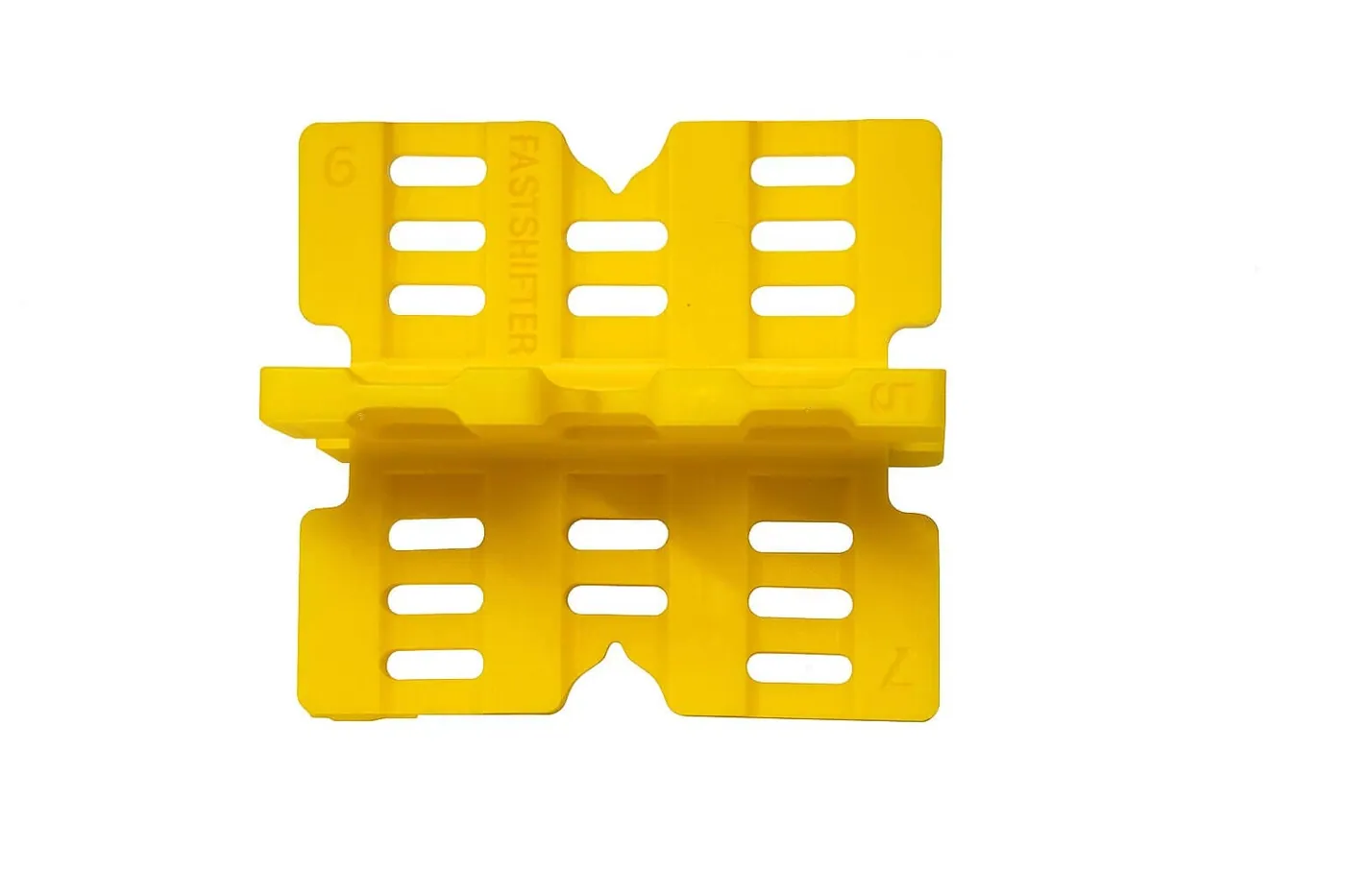
A reusable spacer makes gaps consistent without measuring. The Fastshifter deck board spacer sets 4, 5, 6 or 7 mm (use 4 mm only for boards laid wet that will shrink). Use at least two per board while fixing, and three or four on long boards.
Bowed boards: close the gap, don’t force it
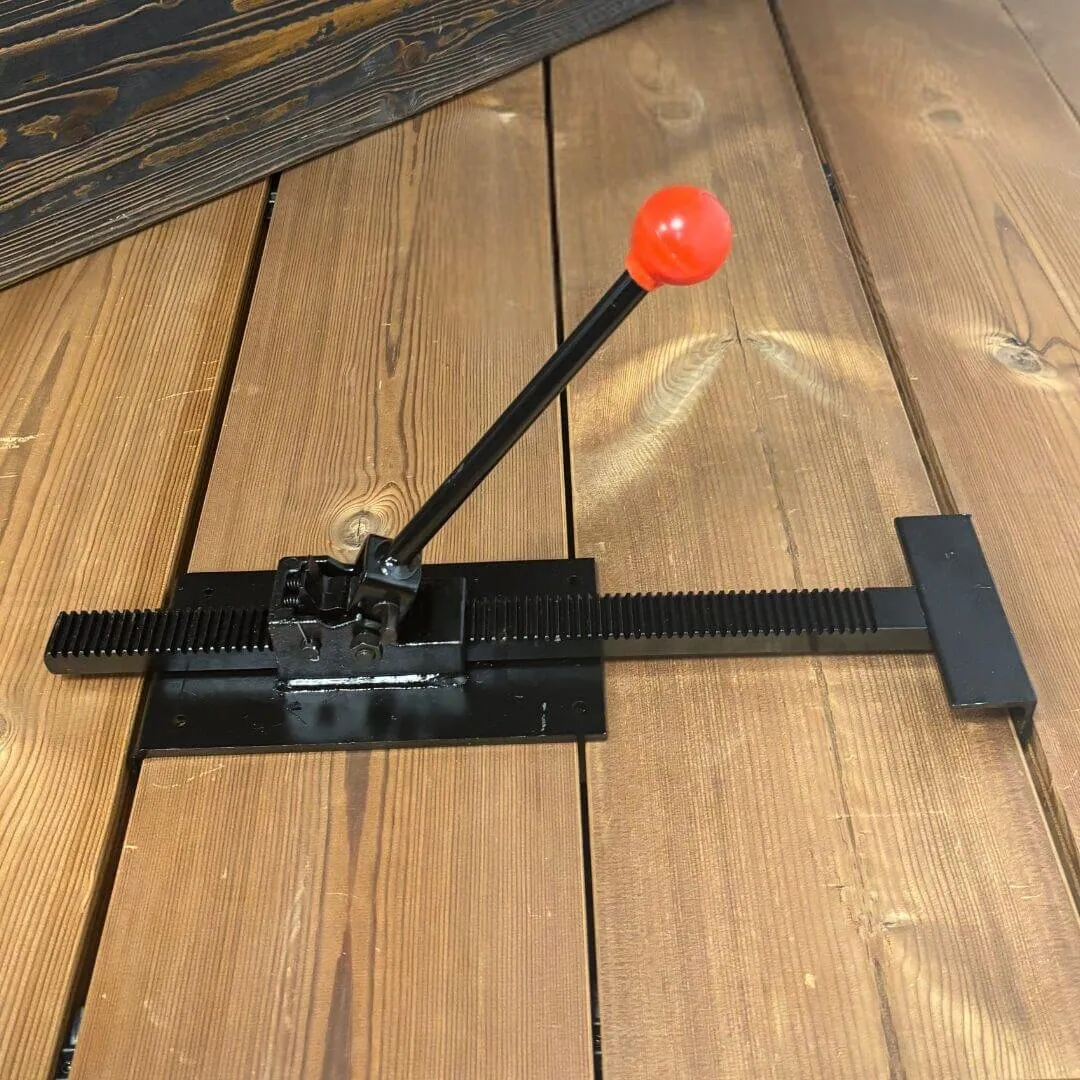
Timber is rarely perfectly straight. A board compression tool pulls a bowed board into line against the spacer and holds it while you fix it. You get a straight, even gap without hammering, and both hands stay free.
Ventilation under the deck
The gap between boards only works if the air underneath can move. Good practice:
- Keep the void open on at least two sides, ideally on opposite sides for cross-ventilation.
- Avoid solid skirting all round. If the client wants a closed look, use slatted cladding with gaps.
- Keep the void clear. Stored timber, leaves and soil heaped against the frame trap moisture.
- Drain the ground underneath. A membrane and gravel, or a fall in the ground, stop the void from becoming a damp pit.
- Be careful with very low decks. The less clearance, the more important the other measures are. Many composite manufacturers specify a minimum clearance under the frame, so check their instructions.
Lift the board off the joist
Where a board sits flat on a joist, water collects in the joint and dries slowly. Two accessories help:
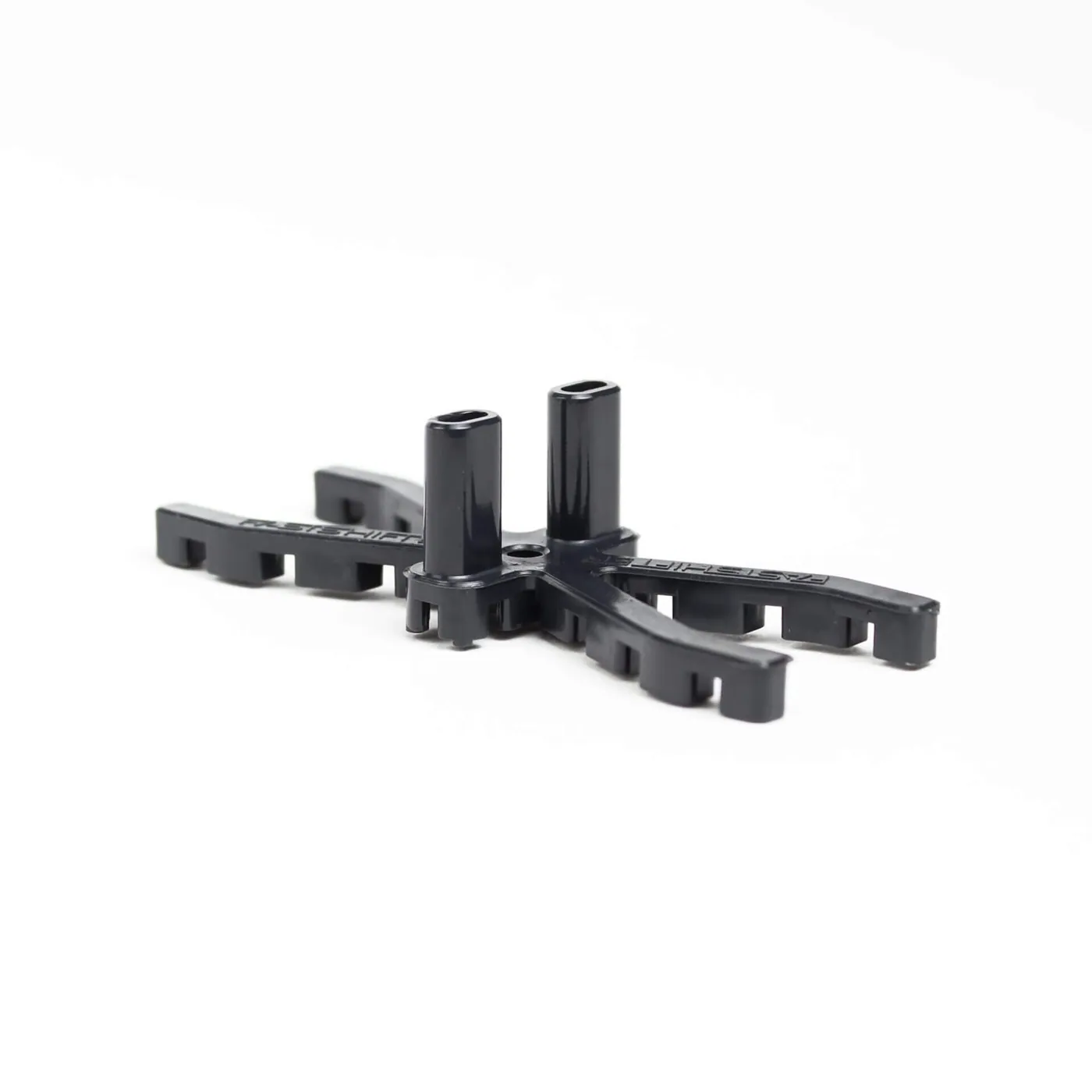
- Air spacer pads sit between board and joist, lift the board clear, set the gap and let water drain. The glass-fibre reinforced air spacer is rated for heavier and commercial use.
- Joist tape on the top face sheds water and seals screw holes. See why joist tape matters.
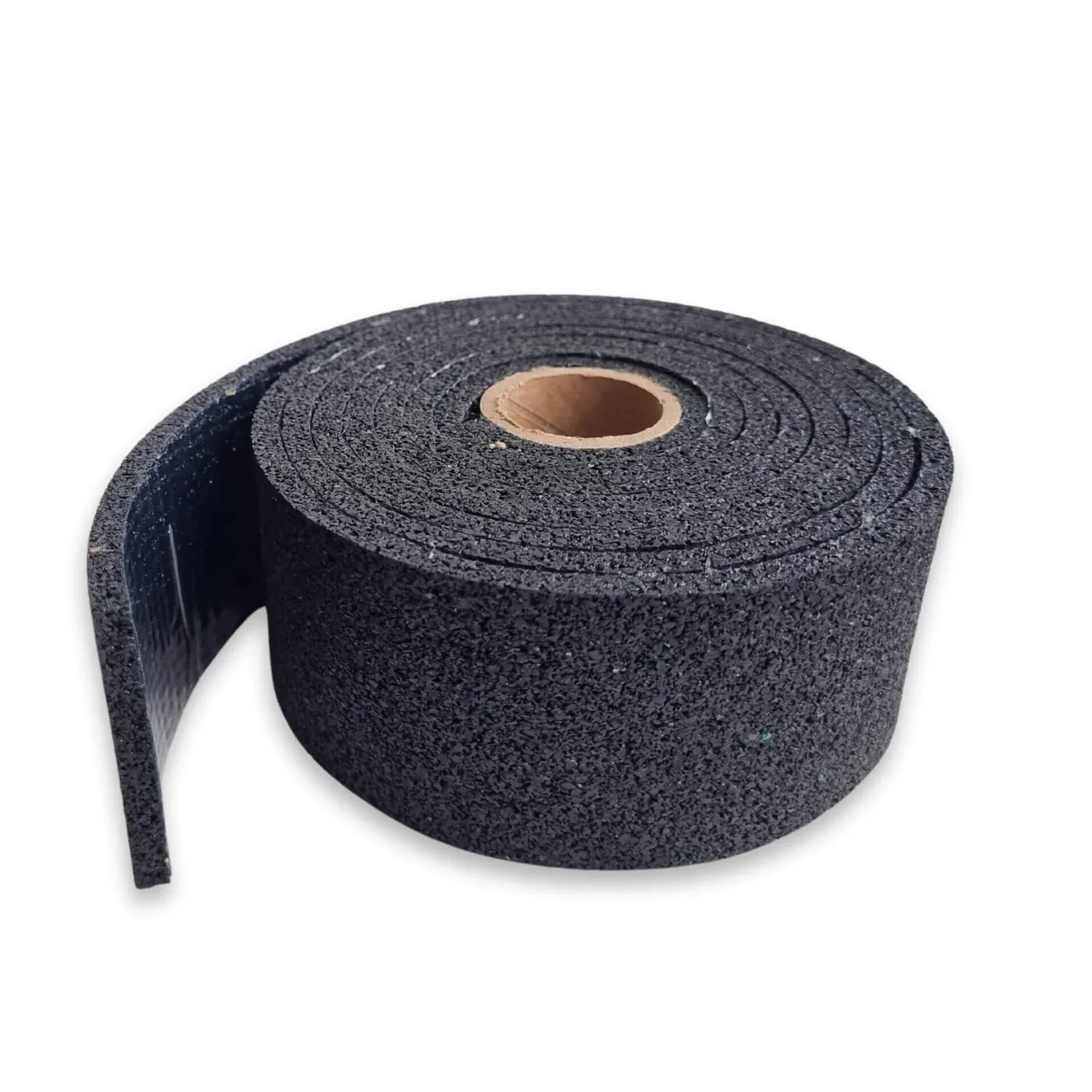
At side boards and fascia, a self-adhesive rubber strip forms a consistent 3 or 5 mm drainage gap between the board and the structure.
Checklist
- Gap chosen by board width and moisture content
- Spacers used on every board, at least two per board
- Composite end gaps per the manufacturer’s table
- Void open on at least two sides, no solid skirting all round
- Ground under the deck drains, void kept clear
- Boards lifted off joists or joists taped
Read next: why the substructure matters more than the boards.
Frequently asked questions
How big should the gap between deck boards be?
A widely used guideline is 5–6 mm for boards up to 90 mm wide and 7–8 mm for wider boards. Composite boards follow the manufacturer's figures. The aim is a gap that stays open enough for drainage and airflow when the boards swell.
Should I leave gaps if the timber is wet?
Wet or freshly sawn timber shrinks as it dries, so the gap grows. Boards laid wet can be fixed with a slightly smaller gap; kiln-dried boards that will take up moisture need the full gap.
Do composite boards need end gaps?
Yes. Composite boards expand and contract along their length with temperature. Manufacturers specify end gaps at butt joints and a larger gap at walls and fixed objects. Follow their table for your board length and installation temperature.
How much space should be under a deck?
Enough for air to move freely. Very low decks are the most at risk. Keep at least some sides open, avoid solid skirting all round, keep the void free of stored materials and leaves, and make sure the ground underneath drains.
What is an air spacer pad?
It is a small pad placed between the board and the joist. It lifts the board clear of the frame so water can drain and air can circulate between them, and its teeth set a consistent board gap.