Ground screw load capacity is not a fixed number printed on the screw. It comes from the soil around and below the helix, the length and tube diameter, the frost conditions and the direction of the load: push, pull or sideways. Installation torque is a useful on-site indicator, but for real design values use the supplier's data for your soil or a load test on site.
Test the system on your next deck Request samples of the tapes, screws, pedestals and foundations mentioned in our guides.
Request samples →Buyers often ask for one number: what is the ground screw load capacity? The honest answer is that a screw does not have a capacity on its own. The screw and the soil work as one system, and the same screw can carry very different loads on two plots in the same street. This guide explains what decides capacity, how to read the signs on site, and when to test or bring in an engineer.
For choosing length and diameter step by step, see choosing ground screw length and diameter. For the comparison with concrete, see ground screws vs concrete footings.
How a ground screw carries load
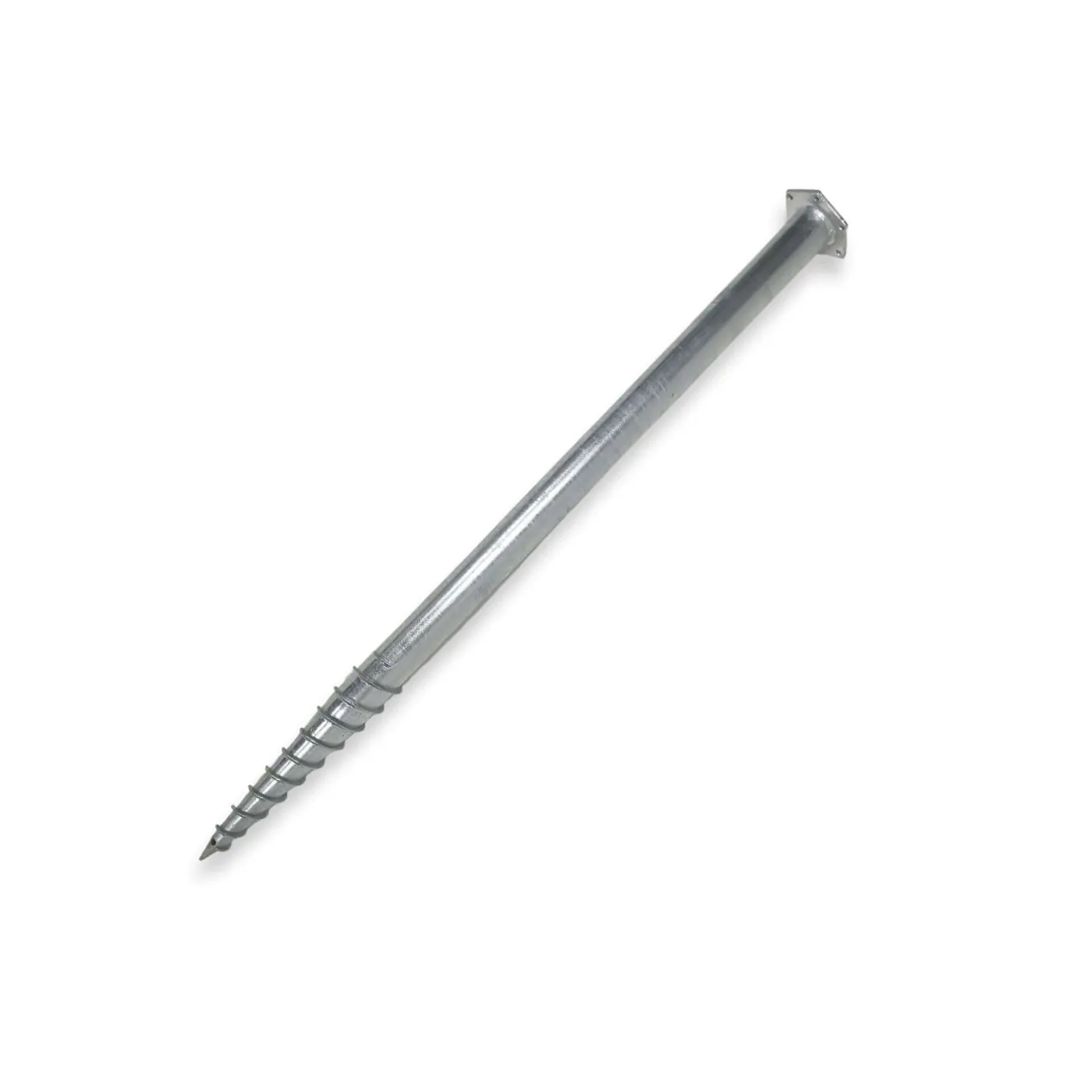
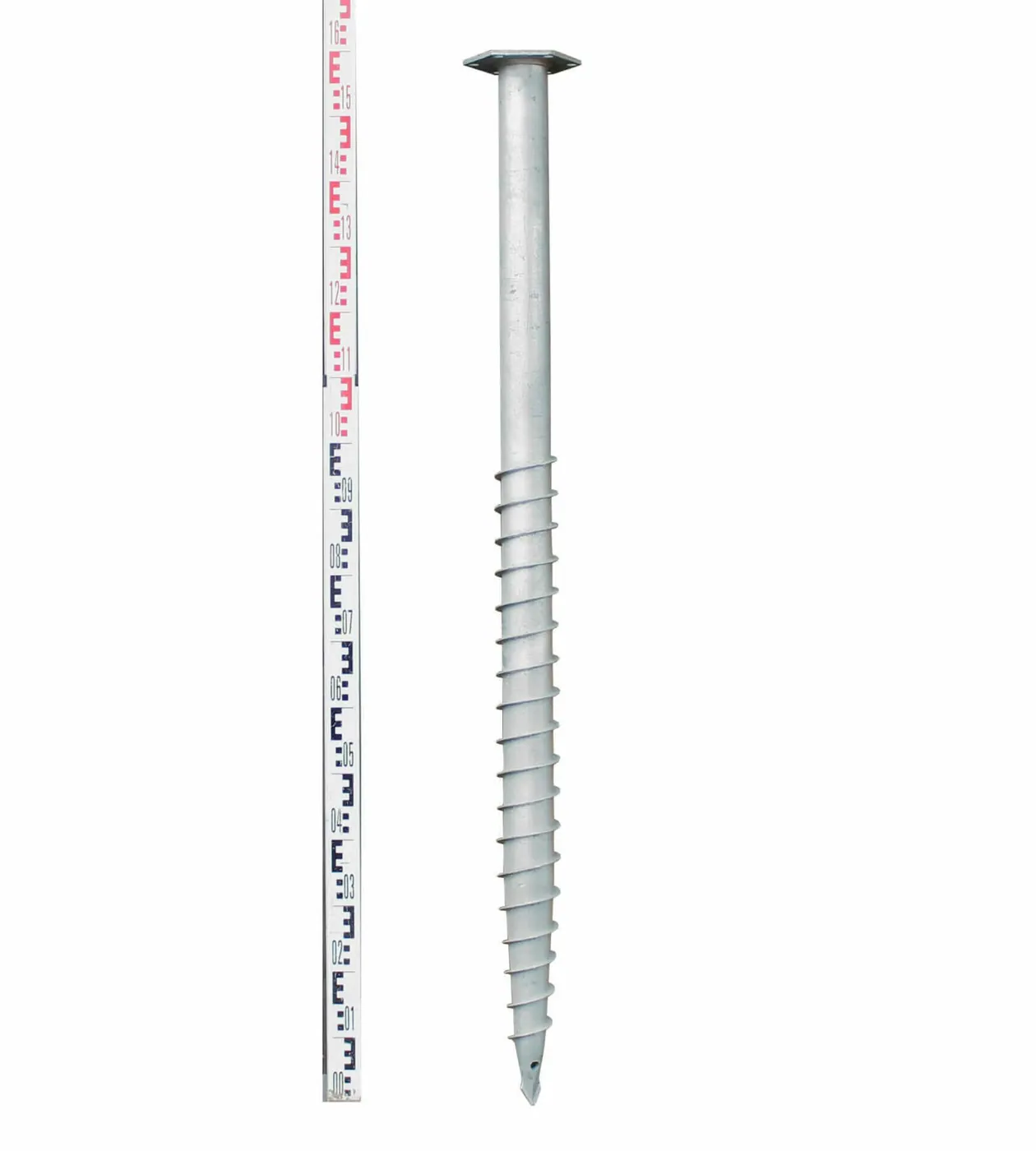
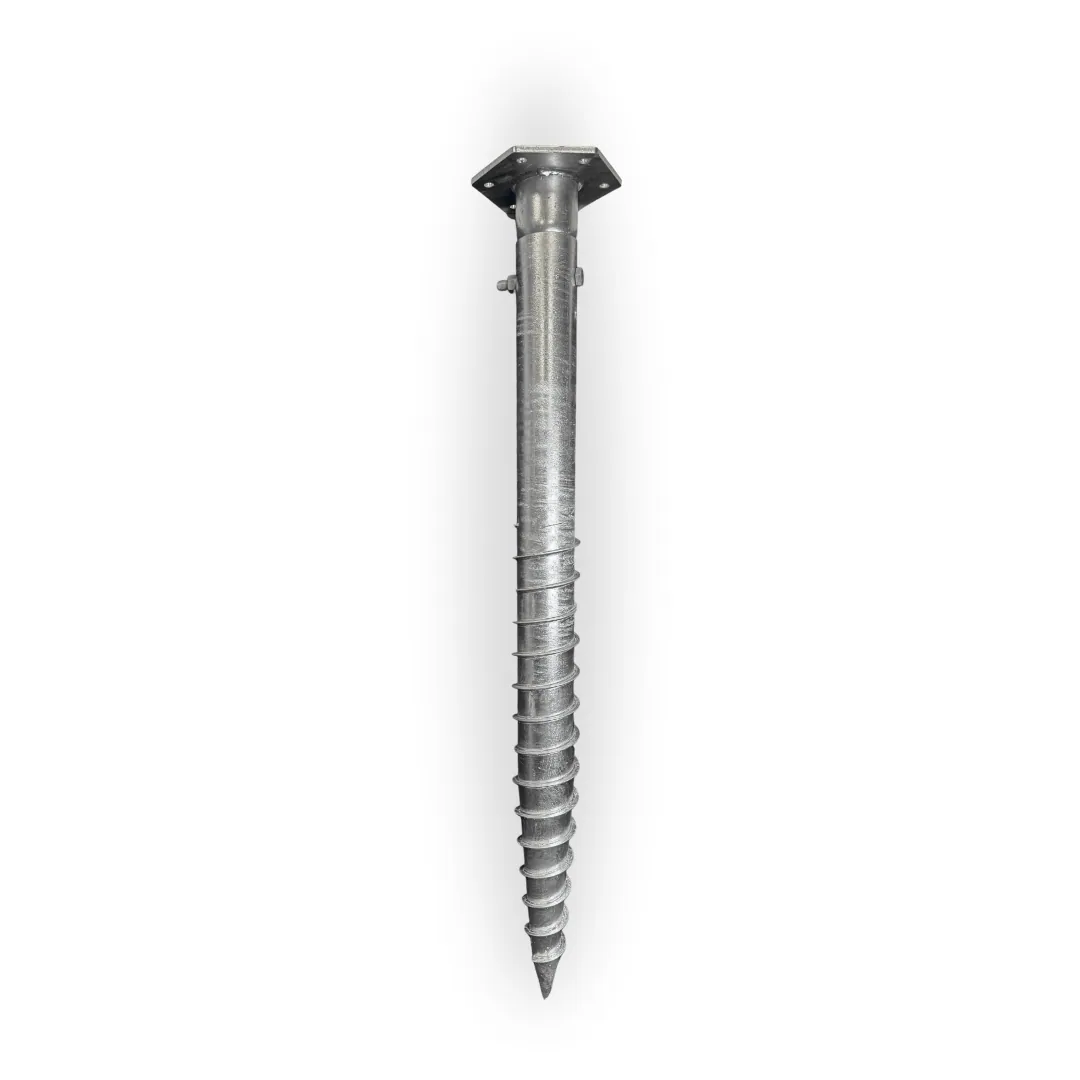
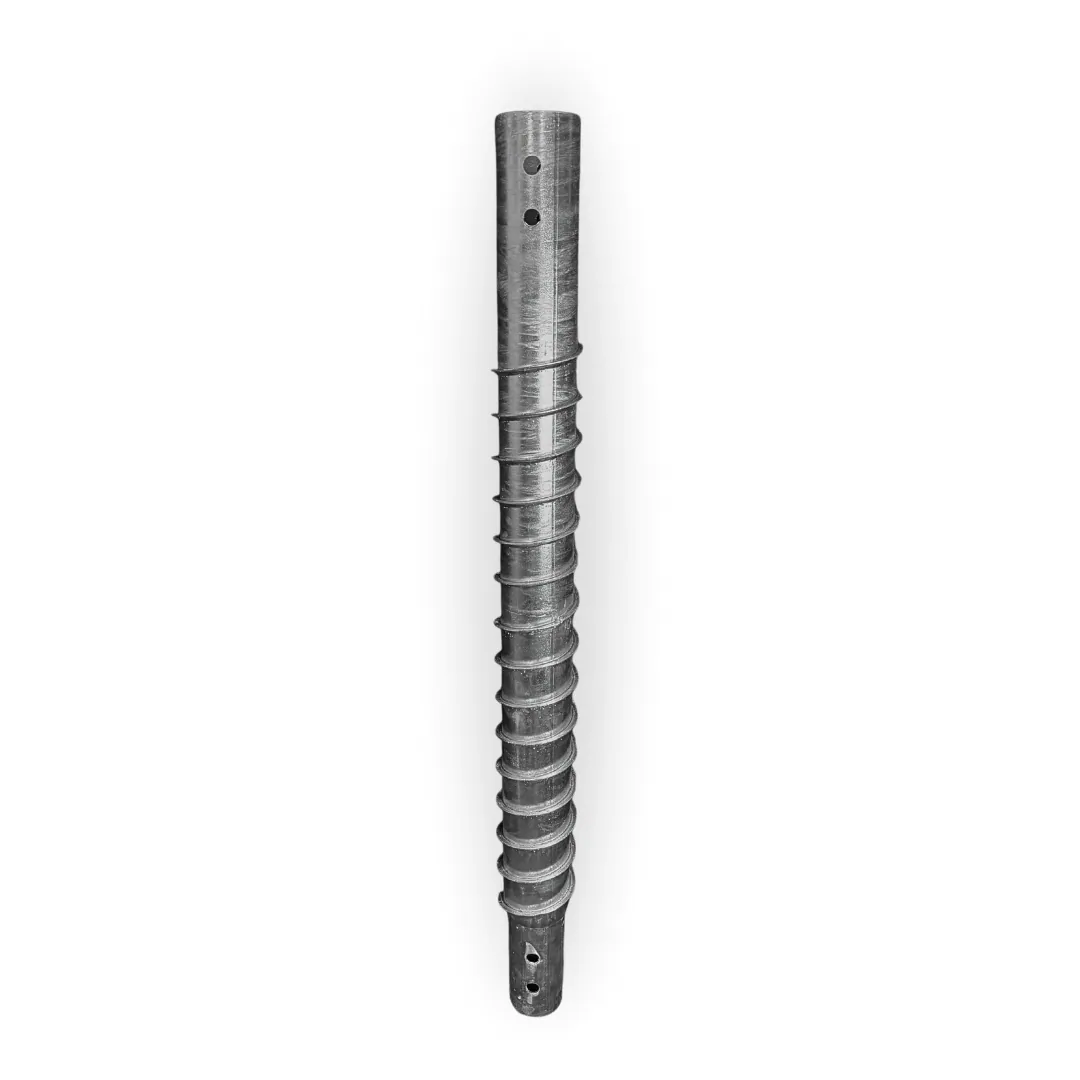
A ground screw is a galvanised steel tube with a helical thread. It carries load in two ways:
- Bearing on the helix. The thread pushes against the soil around and beneath it, like a small footing at depth.
- Friction along the shaft. The soil compacted around the tube adds resistance over its length.
Both depend on how strong the soil is where the screw ends up, not at the surface.
Ground screw load capacity: the five factors
1. Soil type and density. The biggest single factor. Dense sand, gravel and stiff clay give good resistance. Loose sand, soft clay, peat and fresh fill give much less. Groundwater near the helix weakens most soils.
2. Length. Length matters because it decides which soil layer the helix sits in. Extra length helps only if it reaches firmer ground. A longer screw ending in the same soft layer gains little.
3. Tube diameter, wall and helix. A wider tube engages more soil and resists sideways load better. A thicker wall resists bending and twisting, both while driving and in service. The helix and its weld transfer the load to the soil. The Fastshifter range covers 68, 76, 81, 89 and 101 mm diameters with 1.8 to 3.5 mm walls, and several M and U sizes come as EXTRA versions with a reinforced head section and a longer helix weld. Bigger is not automatically better; the right size depends on soil and load.
4. Frost depth. In cold climates, freezing soil expands and can grip the shaft and lift it. The helix must anchor below the frost layer so it holds against that uplift. Capacity calculated in the frost layer is not capacity you can rely on in winter.
5. Load direction. A screw resists three kinds of load, and they are not equal:
- Compression (pushing down): the deck’s weight, people, furniture, snow.
- Uplift (pulling out): wind on roofs, pergolas, screens and fences. Usually the weaker direction.
- Lateral (sideways): wind on tall posts, sloping sites, raised decks. Resisted mainly by the upper soil and the stiffness of the tube, so loose topsoil and a long section above ground both reduce it.
A ground-level deck is mostly compression. A pergola or carport may be governed by uplift and lateral load instead.
What to expect in different soils
This table is qualitative. It tells you what to look for, not what a screw will carry.
| Soil | What to expect | What to check |
|---|---|---|
| Dense sand, gravel | Good resistance once the screw is in | Stones blocking the screw; keep it vertical |
| Stiff clay | Good resistance in dry conditions | Seasonal shrink and swell; groundwater level |
| Loose sand | Lower resistance, especially sideways | Torque at final depth; longer screw or extension |
| Soft clay, silt | Low resistance near the surface | Depth of firmer layer; extension; engineer |
| Made ground, fill | Unpredictable from one spot to the next | Test several positions; fill depth |
| Peat, waterlogged ground | Very low resistance near the surface | Engineer and soil investigation before design |
| Rock, old foundations | Screw may not go in | Probe first; pilot hole or a different foundation |
Installation torque as an indicator
The torque needed to turn the screw tells you about the soil the helix is passing through. On site, it is the most practical signal you have:
- Rising, steady torque near final depth usually means firm soil around the helix.
- Low torque at final depth suggests soft ground: consider a longer screw or an extension.
- A sudden drop can mean a void, a soft layer or a stone pushed aside.
- Big differences between positions mean the soil is variable. Treat each zone separately.
Torque is an indicator, not a design value. Turning a torque reading into a load needs a correlation for that screw type in that soil, which is what supplier data or a test provides.
When to do a load test or ask an engineer
A pull-out or load test applies a measured force to an installed screw, usually with a hydraulic jack, and records how far it moves. It replaces assumptions with numbers for your site. Plan a test or an engineer’s check when:
- the project is large, or a failure would be costly;
- the soil is fill, peat, soft clay or waterlogged;
- torque readings are low or inconsistent;
- the structure has real uplift or lateral loads: roofs, carports, tall screens, hot tubs on raised decks;
- local rules require a foundation design.
For a standard ground-level deck on firm soil, test screws at a few positions and consistent torque are usually enough to confirm the plan.
How to get capacity figures for your project
Ask for capacity data that matches your soil, not a single headline figure. Tell us the soil type, frost depth, structure and load direction, and the screw types you are considering, such as the 68 × 1400 mm M EXTRA, the 76 × 1600 mm M18 or the 89 × 1200 mm N. Request samples to run your own test screws, or write to info@fastshifter.com.
Read next: why the substructure matters more than the boards.
Frequently asked questions
How much weight can a ground screw hold?
There is no honest single figure. The same screw carries very different loads in dense gravel and in soft clay. Use the supplier's data for your soil type, or a load test on site, and have an engineer check heavier or unusual structures.
Is uplift capacity the same as compression capacity?
No. In compression the helix bears on the soil below it; in uplift it has to pull up the soil above it. Uplift is usually the weaker direction, and it matters for pergolas, roofs, fences and anything the wind can lift.
Does installation torque tell me the load capacity?
It is a good indicator, not a certificate. Higher and steadier torque near the final depth usually means firmer soil around the helix. A sudden drop or very low torque is a warning sign. Turning torque into a design load needs a correlation for that screw type and soil, or a test.
When should I do a pull-out or load test?
On larger projects, on unknown fill or soft soil, when torque readings are low or inconsistent, and for structures with real uplift or lateral loads such as roofs, carports or tall screens.
Does a longer ground screw always carry more?
Only if the extra length reaches better soil. A longer screw that ends in the same soft layer gains little. The aim is to put the helix in firm ground and below the frost layer.