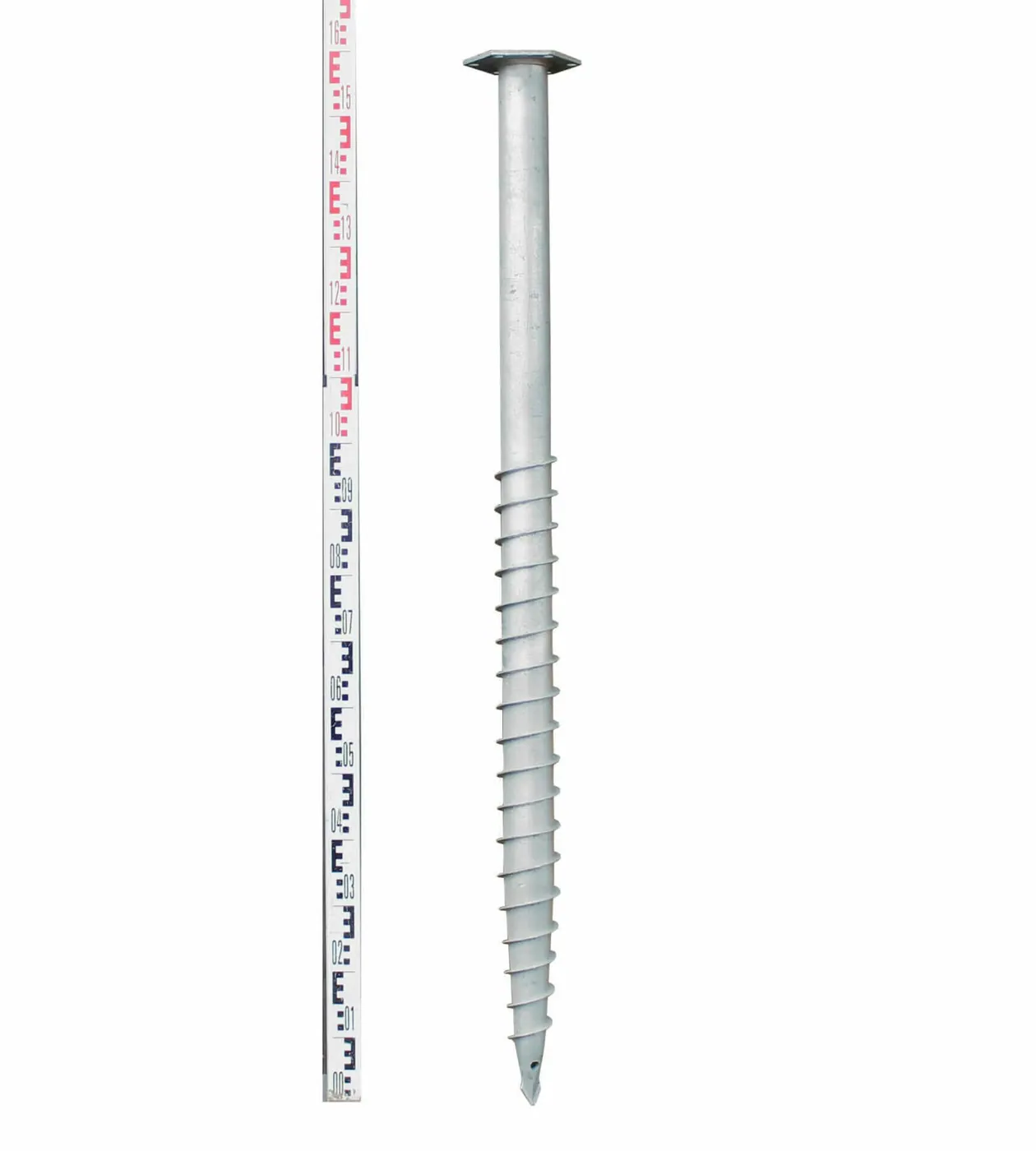
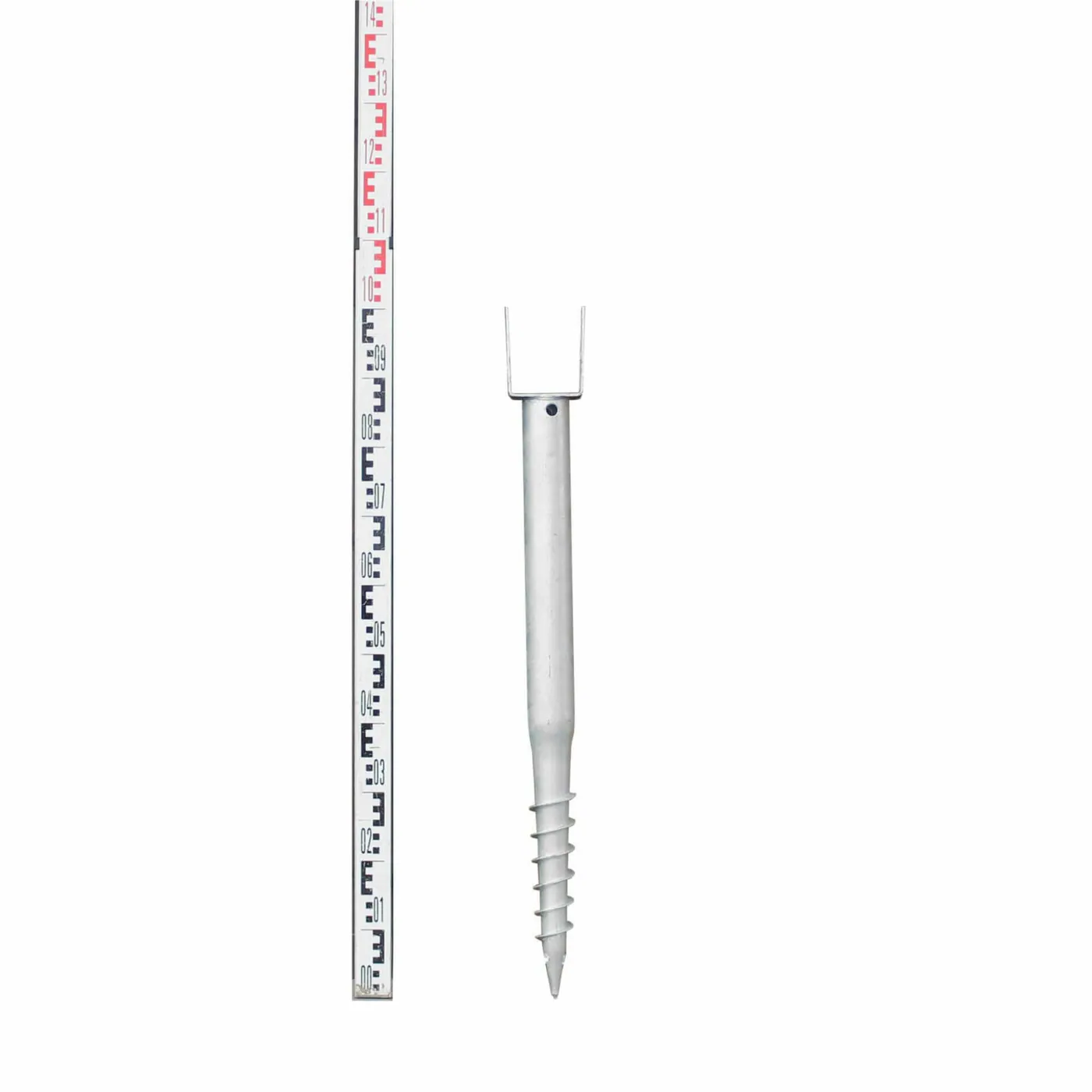
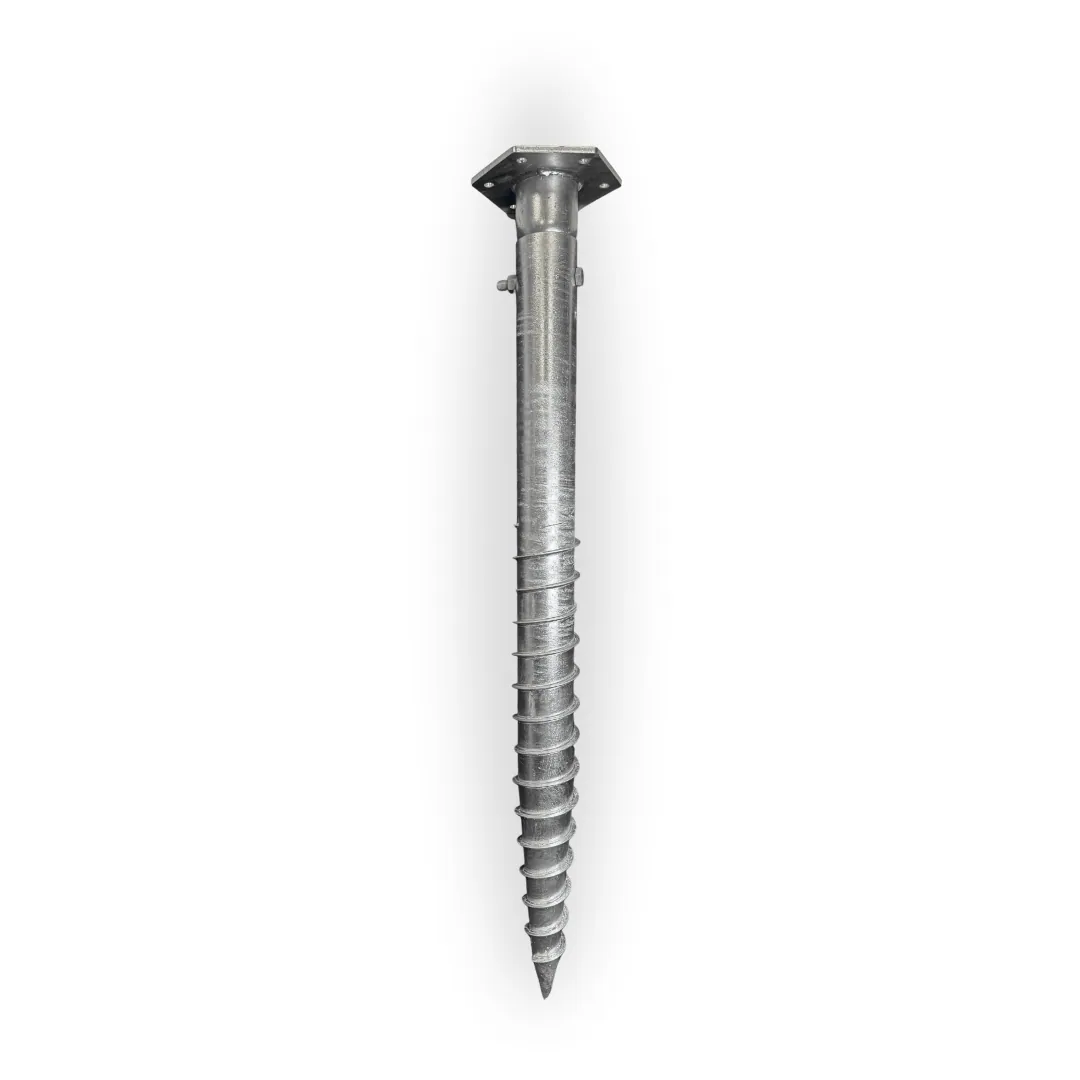
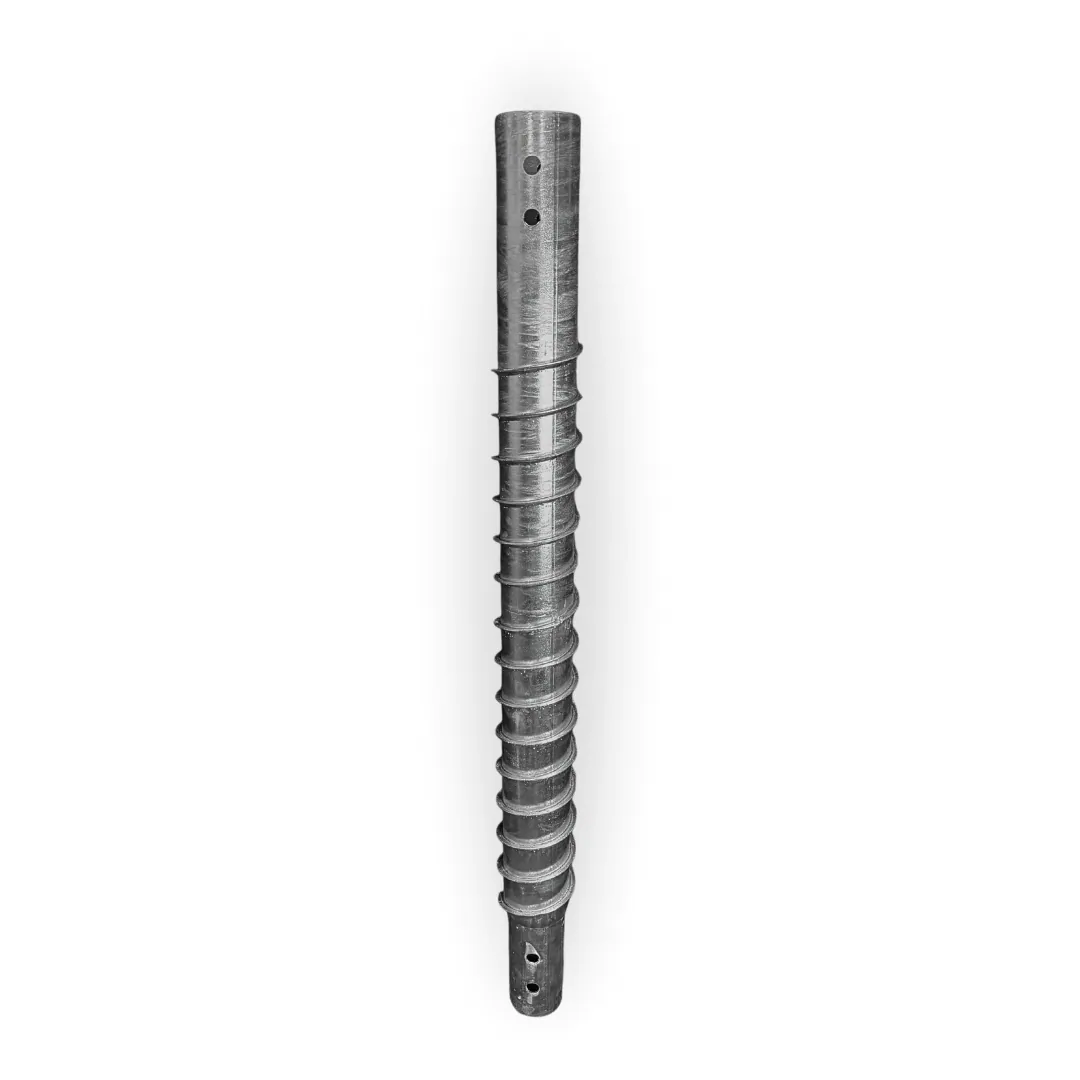
Choose length first: the screw must reach firm soil and, in cold climates, go below the local frost depth. Then choose diameter and wall thickness for the load and soil. Fastshifter deck screws run from 685 to 2050 mm long and 68 to 101 mm in diameter, with extensions for deeper soil. On unusual soils, drive a test screw or ask an engineer.
Most ground screw problems come from the wrong length, not the wrong product. A screw that stops in loose topsoil or in the frost layer will move, however good the steel is. Work through the decision in four steps: soil, frost, load, head.
Step 1: Read the soil
The screw gets its grip from the soil around the helix. Different ground behaves very differently:
- Firm clay and dense sand. Good bearing. Standard lengths usually reach enough firm material.
- Gravel and stony ground. Good bearing once the screw is in, but large stones can block it. Probe first and be ready to shift a position.
- Made ground and fill. Common on new-build plots. The top layer may be rubble, topsoil or loose fill and gives little useful bearing. Plan for longer screws or extensions.
- Organic soils, peat and waterlogged ground. Weak near the surface. This is engineer territory; do not guess.
- Rock or old foundations. A screw may not go in at all. A pilot hole, a shifted layout or a different foundation may be needed.
The simplest test costs one screw: drive a test screw at two or three positions before committing to the layout. Resistance, wobble and refusal tell you more than any chart. On larger projects, the driving torque is a useful indicator of capacity.
Step 2: Check the frost depth
In cold climates, wet soil freezes, expands and lifts anything sitting in it. The thread must anchor below the frost-affected layer, or the deck will heave out of level in winter. Your local building regulations give the design frost depth.
That one figure explains the range. Standard deck screws are 1–2 m long because they need to reach below the frost layer plus a margin of firm soil. In regions without ground frost, a short screw with a wide head can do the job instead; see deck foundations in regions without ground frost.
Step 3: Match diameter and wall to the load
Longer and wider screws engage more soil. Thicker walls resist bending and twisting during driving and in service. As general practice:
- Light, ground-level garden decks: 68 or 76 mm shafts.
- Softer soil, raised decks, longer extensions: larger diameters (89 or 101 mm) or 3–3.5 mm walls.
- Heavier structures such as hot tubs, pergolas or roofs over the deck: get a design check.
The Fastshifter range in numbers, from the product data:
| Type | Head | Diameters | Lengths | Wall |
|---|---|---|---|---|
| M | Flat plate, M12 to M24 stud | 68, 76 mm | 750–2050 mm | 1.8–3.5 mm |
| U | U-head for timber post or beam | 81, 101 mm | 685–1600 mm | 1.8–3 mm |
| N (connection series) | Plate with M20 stud, couples to N extensions | 76, 89 mm | 1200 mm | 3.5 mm |
| GM | GM adapter head; 220 mm round adapter available | 76 mm | 1200 mm | 3 mm |
| Extensions | Couple to the base screw | 68, 76, 89 mm | 500 or 1000 mm | 1.8–3.5 mm |
Several M and U sizes also come as EXTRA versions, with a reinforced head section and a longer helix weld for higher loads or softer ground.
Step 4: Pick the head for the frame
- Type M suits bolted connections: post shoes, beam brackets, levelling nuts and steel base plates. The 76 × 1600 mm M18 is a typical deck size.
- Type U takes a 90–100 mm timber post or beam directly: drop it in, drill through and bolt, as with the 101 × 1000 mm U.
- N series is built around extensions. The 76 × 1200 mm N couples to N extensions when firm soil is deeper than expected.
- GM series takes a round adapter with a 220 mm plate for round posts, steel columns and post shoes.
When to add an extension
Drive the base screw until only the coupling is above ground, join the extension, tighten the joint fully and keep driving. Typical cases:
- the first metre gives no useful bearing;
- downhill supports on a slope stand proud of the ground;
- decks over water or wetland;
- raised terraces well above grade.
Extensions can be stacked where very deep anchorage is needed. Remember that a long unsupported length above ground behaves differently from a buried one; bracing may be needed on tall supports.
When to stop and get advice
- Peat, organic or permanently waterlogged soil.
- Unknown fill on a recently built plot.
- Heavy or concentrated loads.
- Steep slopes or decks well above ground.
- Results from your test screws that do not make sense.
In these cases a geotechnical check or an engineer’s design costs far less than relevelling a deck. Compare options in ground screws vs concrete footings.
Read next: how many pedestals per m².
Frequently asked questions
How long should a ground screw be for a deck?
Long enough to reach firm soil and, where the ground freezes, to anchor below the local frost depth. That is why most deck screws are 1–2 m long. In frost-free regions with firm soil, a short wide-head screw can be enough.
What diameter ground screw do I need for a deck?
For typical garden decks, 68 or 76 mm shafts are common. Larger diameters such as 89 or 101 mm and thicker walls suit softer soil, longer extensions or heavier loads. The final choice depends on soil and load.
What is the difference between Type M and Type U ground screws?
Type M has a flat bearing plate with a central threaded stud, for bolted brackets, post shoes and base plates. Type U has a U-shaped head that takes a 90–100 mm timber post or beam directly, bolted through.
When do I need a ground screw extension?
When the first metre or so of soil is soft or made-up ground, on sloping sites where downhill supports stand proud, over water or wetland, and for raised decks or heavier structures.
How much load does one ground screw carry?
It depends on soil, length and diameter. On larger or unusual projects, a load test or engineer's check is the reliable answer.
What is an EXTRA ground screw?
The same geometry as the standard screw, with a reinforced head section and a longer helix weld, for structures that carry more load or sit in softer ground.