Ground screws are driven into the soil and carry load immediately: no digging, no spoil, no curing time, and they can be removed later. Concrete footings work in almost any soil and need no special equipment, but take more labour and days to cure. For most decks on soil, ground screws are faster. In rocky ground or very soft soil, check first.
For a deck on soil, the foundation is the first decision and the hardest to change. The two main options are the concrete footing, which every builder knows, and the screw-in foundation, which is now standard on many European sites. Here is how they compare.
The short comparison
| Ground screws | Concrete footings | |
|---|---|---|
| Excavation | None | A hole per footing, spoil to remove |
| Ready to load | Immediately | After curing, usually several days |
| Weather | Can be installed in rain and cold | Frost and heavy rain affect pouring and curing |
| Site impact | Minimal, lawns and paving stay intact | Mess, heavy material, access needed |
| Removal and reuse | Can be unscrewed, reused or recycled | Must be broken out |
| Height adjustment | Adjustable heads and brackets | Set at pouring |
| Equipment | Driving tool or machine | Spade or auger, mixer |
| Soil limits | Large rock or rubble can block it | Works in almost any soil |
| Material per point | Steel tube | Concrete, sometimes rebar and formwork |
How a ground screw works
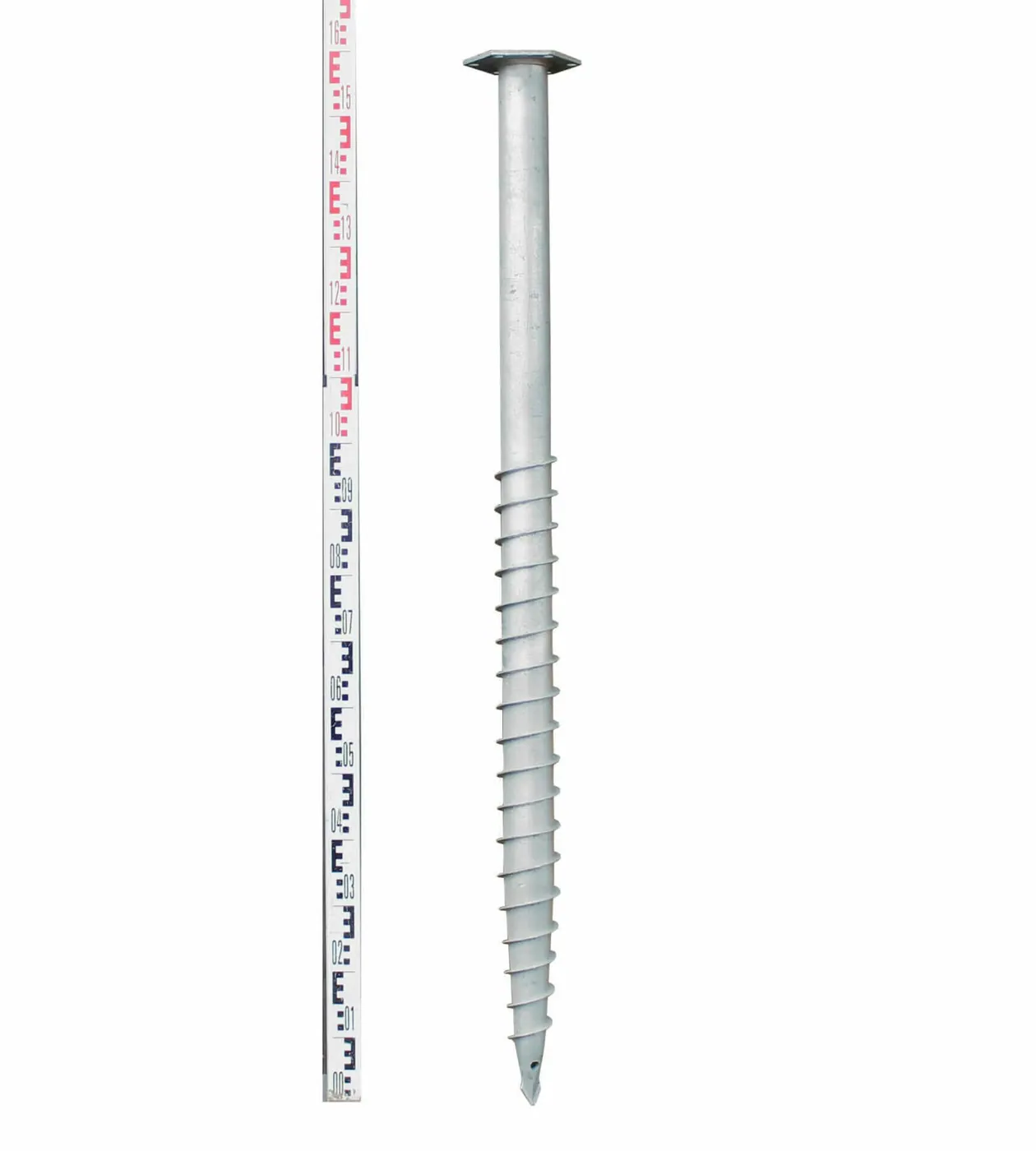
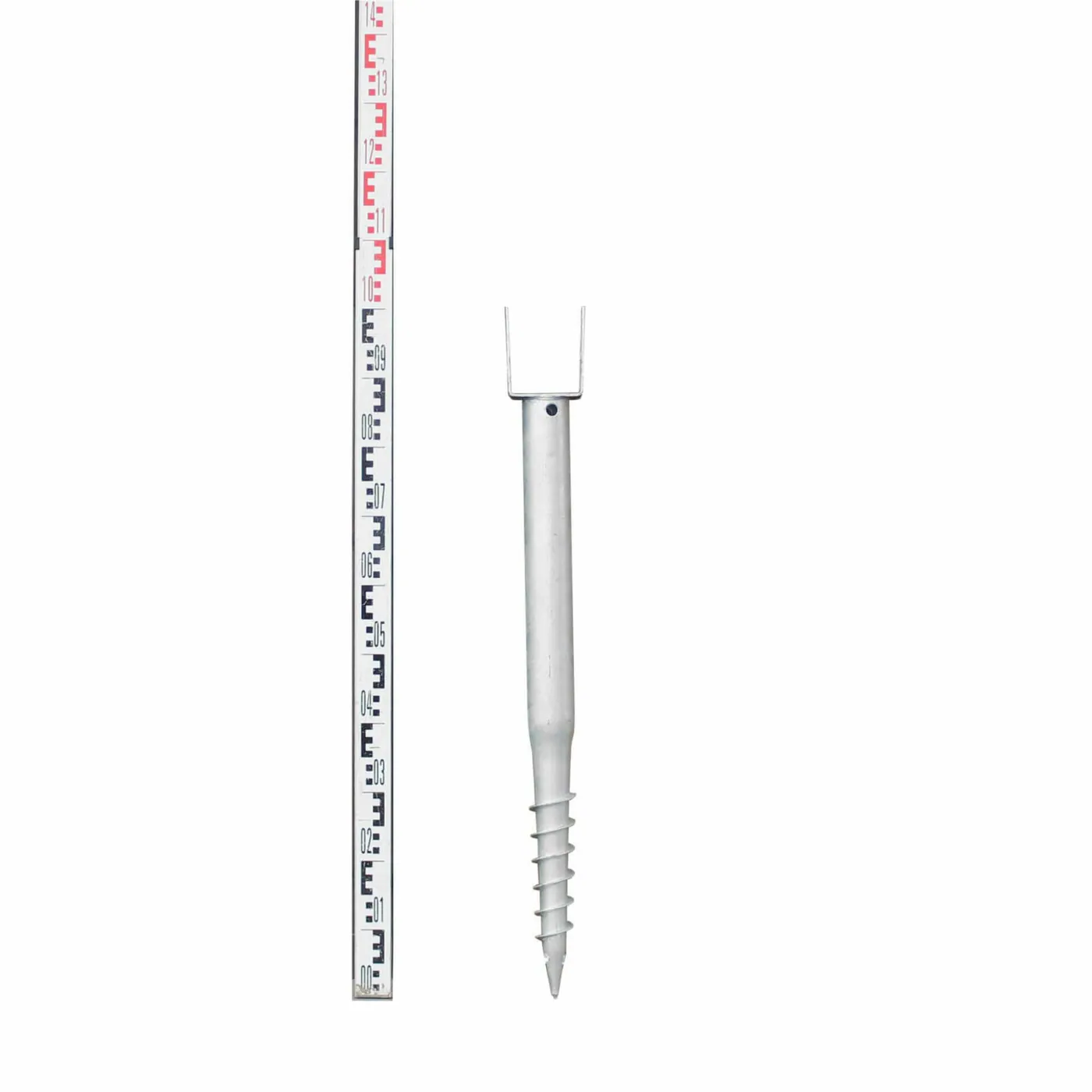
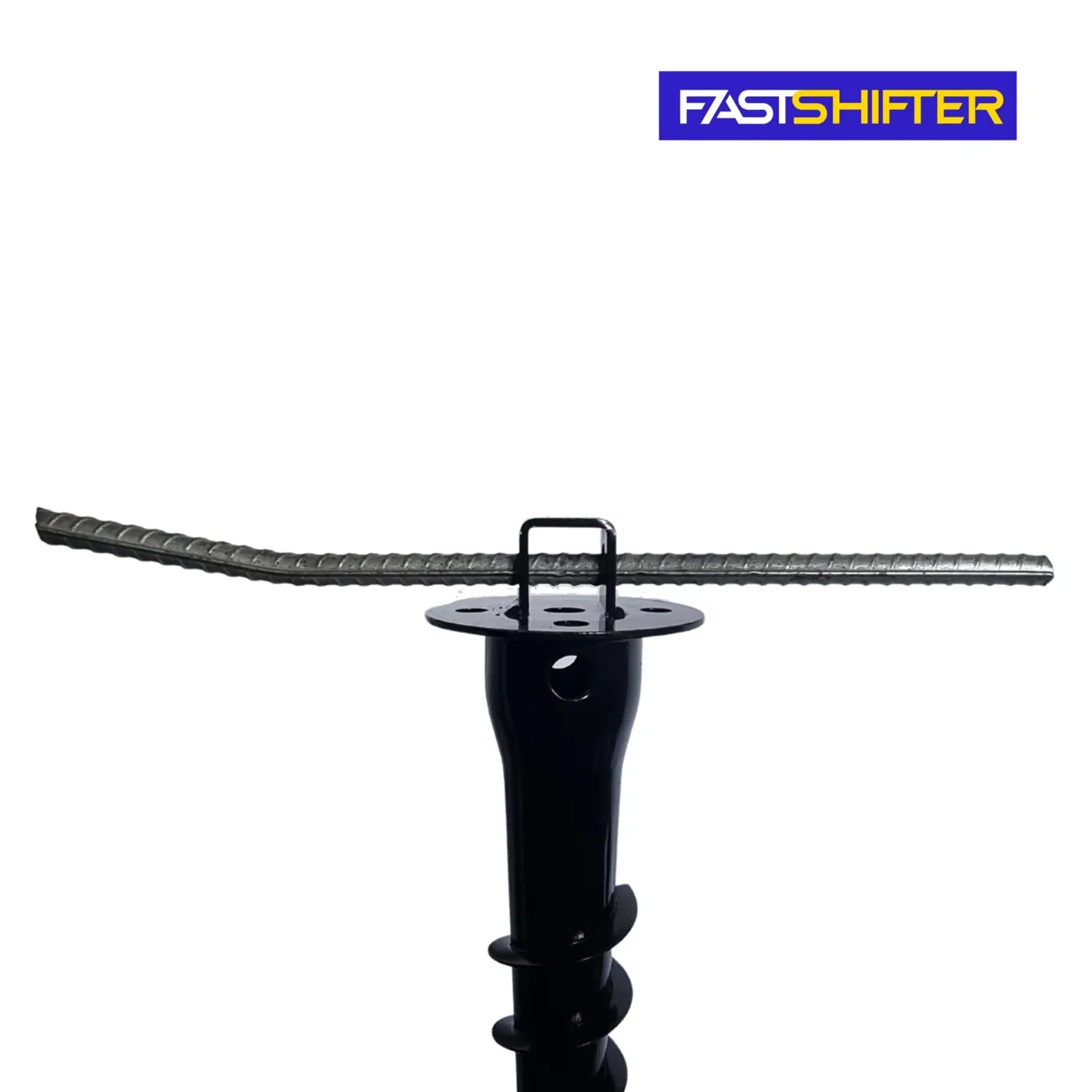
A ground screw is a galvanised steel tube with a helical thread. It is driven into the ground like a giant screw. The thread compacts the soil around it and anchors it, so it carries compressive and uplift loads as soon as it is in. A head plate, U-bracket or threaded stud takes the post, beam or bracket.
In the Fastshifter range:
- Type M: flat bearing plate with a central threaded stud, for bolted brackets, post shoes and steel base plates.
- Type U: U-shaped head that takes a timber post or beam directly, bolted through.
- Extensions: add length where stable soil is deeper.
- Lamp-post screws: short screws for outdoor lights and signs.
Where ground screws win
- Speed. No digging, no waiting. The frame can go on the same day.
- Access. Gardens with no machine access, finished lawns, paved surroundings.
- Bad weather. Driving continues when concrete pours would be postponed.
- Temporary or movable structures. They can be unscrewed and reused.
- Clean sites. Nothing to remove and no concrete washout.
Where concrete still makes sense
- Rocky ground or old foundations where a screw cannot be driven.
- Very soft or organic soils, where an engineer may specify a different foundation altogether.
- Projects with existing concrete work, where the crew and materials are already on site.
Frost: why length matters
In cold climates, the ground freezes and expands in winter. A foundation that sits in the frost-affected layer can be lifted, and the deck goes out of level. That is why standard deck ground screws are typically 1–2 m long: the thread anchors in soil below the frost-affected layer.
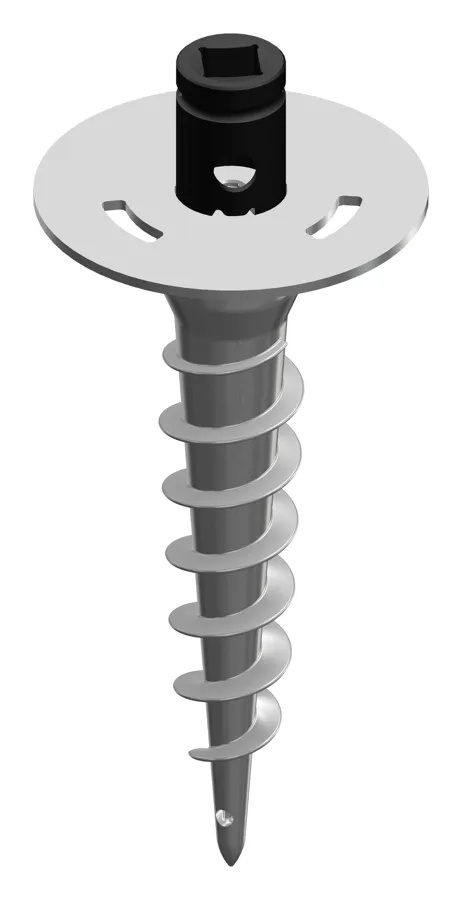
In regions without ground frost, such as lowland southern Europe (check local frost depth), that depth is not needed. A short screw with a wide head carries the load near the surface and can be driven in about a minute. That is the idea behind the Fastshifter Trident Drive: a short pile with a wide head that resists sinking, made for countries without freezing ground.
Environmental impact
Concrete has a large carbon footprint, mostly from cement production. Steel is also energy-intensive. A 2024 life-cycle assessment by the Bern University of Applied Sciences (BFH), comparing screw and concrete foundations on three real projects, found that which option is better depends on the quantity of material in each project. It also found that ground screws have a clear advantage at end of life: they can be reused or recycled as secondary steel, while concrete footings are usually broken out and downcycled.
The honest summary: ground screws are not automatically greener, but reuse makes a big difference.
Practical tips for installers
- Probe first. Drive a test screw at a couple of positions to see what the soil is like.
- Keep the screw vertical. Check plumb in two directions during the first half-metre.
- Measure the torque. On larger projects, the driving torque is a useful indicator of capacity.
- Use a string line and a laser to set heights and alignment, then fine-tune with the adjustable head.
- Do not overdrive and back out. Backing a screw out loosens the soil around it.
Quick decision guide
- Lawn or garden soil, normal conditions → ground screws
- Rocky or rubble-filled ground → test first; concrete may be easier
- Frost-free climate, light deck → short wide-head screws such as Trident Drive
- Ground you must not dig into → a block base on the surface
- Slab, roof or paving → adjustable pedestals
Read next: why the substructure matters more than the boards.
Frequently asked questions
Are ground screws as strong as concrete footings?
For decks and similar light structures, correctly sized ground screws in suitable soil carry the design load. Their capacity depends on soil, length and diameter, so on larger or unusual projects a simple load test or engineer's check is sensible.
How long do ground screws last?
Hot-dip galvanised steel ground screws are designed for decades of service in normal soils. Very aggressive soils, such as acidic or salt-laden ground, reduce the service life and should be checked.
Can you install ground screws in winter?
Yes, as long as the ground is not frozen hard at the surface. Unlike concrete, there is no curing to protect from frost.
What happens if a ground screw hits a stone?
Small stones are usually pushed aside. A large stone or rock may need a pilot hole or a shifted position. In rocky or demolition-filled ground, test a few positions before committing to a layout.
How deep should a ground screw go?
Deep enough to reach stable soil, and in cold climates below the frost-affected layer, so the deck does not heave in winter. That is why standard ground screws for decks are 1–2 m long. In regions without ground frost, short screws with a wide head can be enough.
Are ground screws better for the environment than concrete?
It depends on the project. A 2024 life-cycle study by Bern University of Applied Sciences found the result varies with the quantity of material, but ground screws have a much higher recycling and reuse potential at end of life.