Paving pedestals carry porcelain tiles or concrete and stone slabs at their corners, so the terrace sits level and dry above a slab, roof or balcony without mortar. Choose a tile approved for raised laying, measure the build-up to pick pedestal heights, and plan about 4 pedestals per m² for 600 × 600 mm tiles. Add slope adjusters on falls, rubber pads on membranes and proper edge details.
Test the system on your next deck Request samples of the tapes, screws, pedestals and foundations mentioned in our guides.
Request samples →A raised tile terrace, sometimes called a floating terrace, is built from pedestals for porcelain tiles or concrete and stone slabs. The tiles sit dry on height-adjustable supports instead of a mortar bed. Water drains through the open joints, the base underneath stays ventilated, and any tile can be lifted later. This guide covers what is specific to tiles and slabs. For timber or composite decks on pedestals, see pedestal decks on roofs, balconies and slabs.
Paving pedestals or a mortar bed?
| Tiles on paving pedestals | Tiles bonded on mortar or adhesive | |
|---|---|---|
| Drainage | Through open joints and under the surface | Over the surface, needs a fall in the tiles |
| Level on an uneven or sloping base | Set at each pedestal | Needs screed or a thicker bed |
| Access to membrane, drains, cables | Lift a tile | Break out tiles |
| Wet trades and curing time | None | Yes |
| Adjustment after laying | Yes, from above | No |
| Joint width | Fixed by the spacer tabs | Set by hand |
Pedestals are the natural choice for roof terraces and balconies over waterproofing, for cracked or uneven concrete slabs, and wherever services or drains need to stay reachable.
Which tiles and slabs work on pedestals
On pedestals a tile is supported only at its corners, so it works as a small slab spanning between them. That rules out thin indoor tiles. Suitable materials are:
- outdoor porcelain made for raised laying;
- concrete paving slabs;
- natural stone slabs of sufficient thickness.
Whatever the material, check that the manufacturer approves it for pedestal laying, and use their figures for format, breaking load and permitted use. Large or heavy formats may need an extra pedestal under the middle of the tile.
Choosing pedestals for porcelain tiles
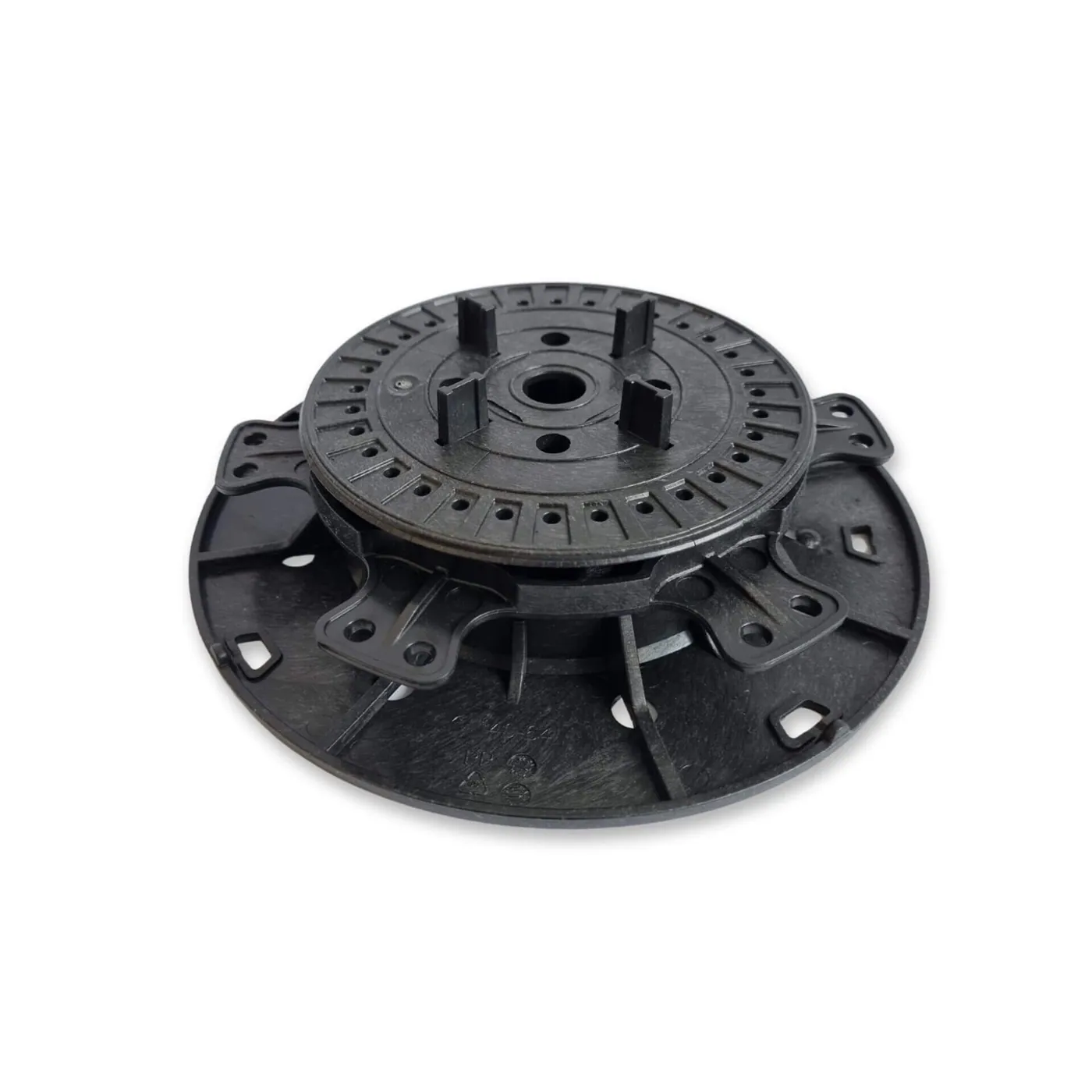
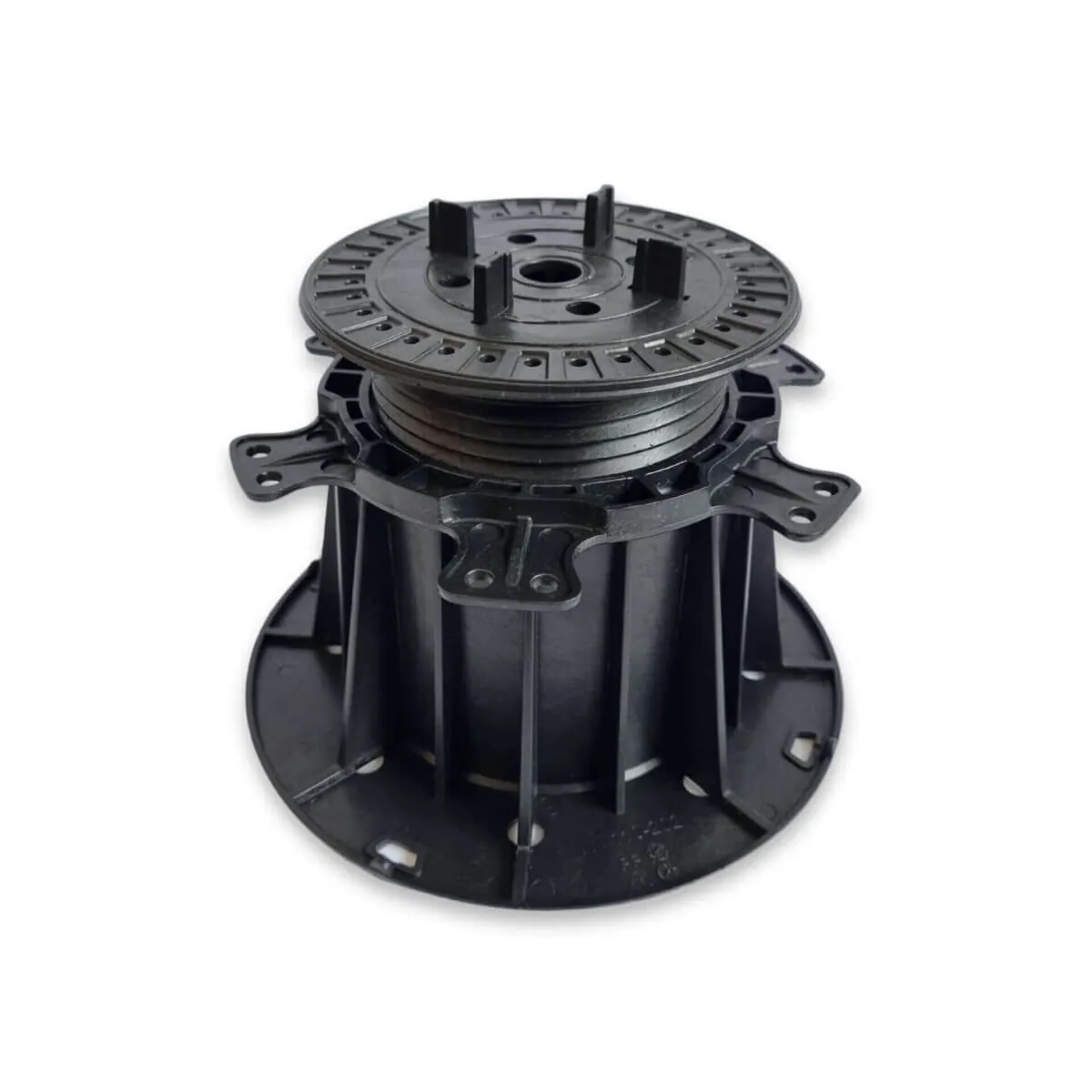
The Fastshifter FT tile pedestals differ from the joist versions in the head: it carries integrated 4 mm spacer tabs, so each corner drops into place and every joint comes out the same width. Height is set by a fine screw thread and can be corrected after laying.
| Model (tiles) | Height range |
|---|---|
| FT1 | 21–27 mm |
| FT2 | 27–40 mm |
| FT3 | 40–64 mm |
| FT4 | 64–110 mm |
| FT5 | 110–202 mm |
| FT6 | 202–302 mm |
Each pedestal is rated up to 800 kg and made of reinforced recycled polypropylene. To choose sizes, measure the lowest and highest points of the base relative to the finished level and subtract the tile thickness. Most terraces need two or three sizes because the base falls towards the drains. See the full pedestal range, for example the FT3 tile pedestal 40–64 mm or the FT5 tile pedestal 110–202 mm.
Grid and quantities
With 600 × 600 mm tiles, plan about 4 pedestals per m². Perimeter tiles and cut tiles need their own supports, so small or irregular areas come out higher. The worked method is in how many pedestals per m².
Slope, membrane and edges
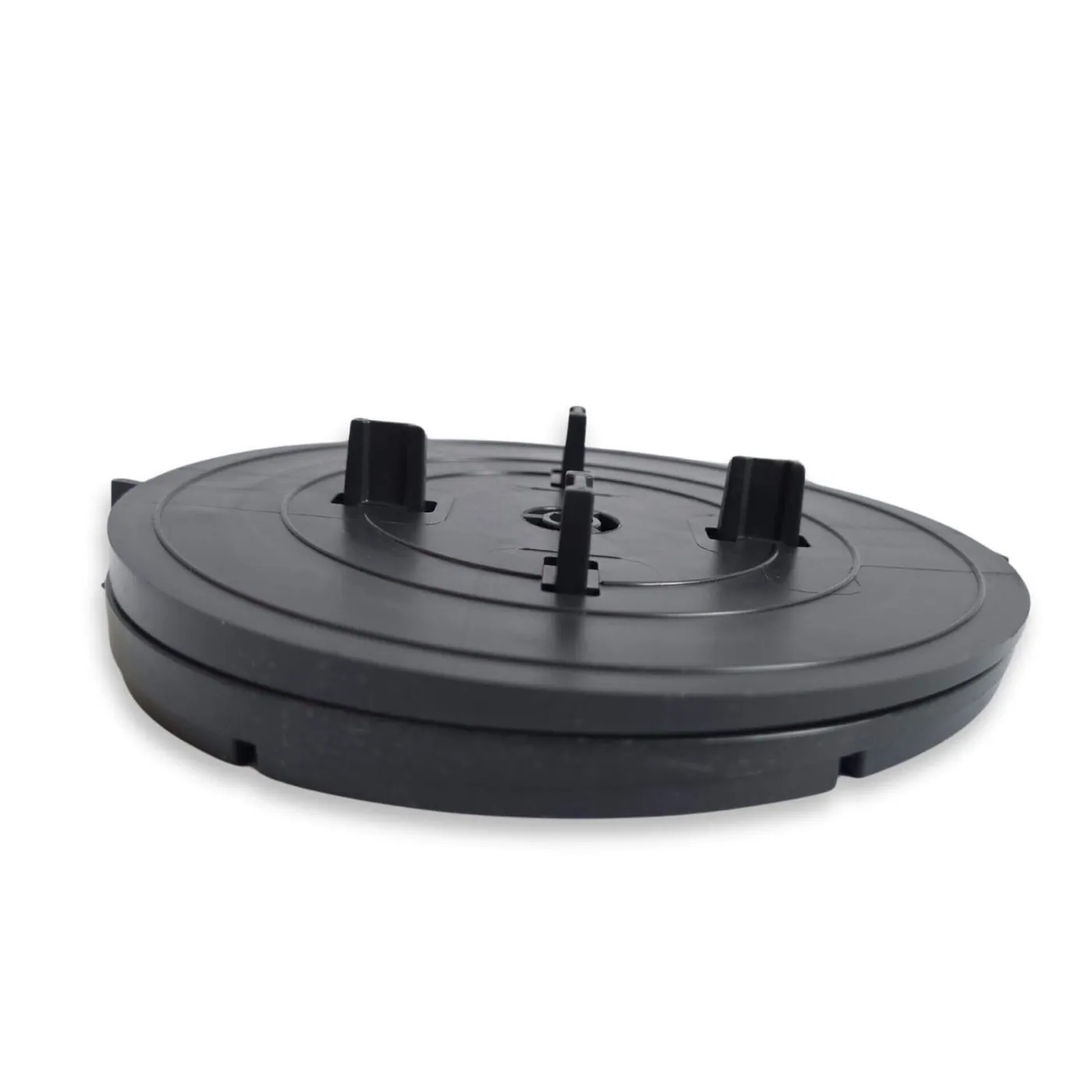
Slope. Roofs and balconies are laid to a fall. The tile pedestal head has no built-in slope compensation, so where the base falls, fit a slope adjuster on the head; it takes up to 5 %. Without it, the tile corner rests on one edge of the head.
Membrane. Put a rubber support pad under each pedestal on waterproofing. It protects the membrane, damps footfall noise and stops the base sliding. Check the membrane maker’s requirements for point loads and protection layers.
Edges. The perimeter is where tiles are least supported and most likely to move.
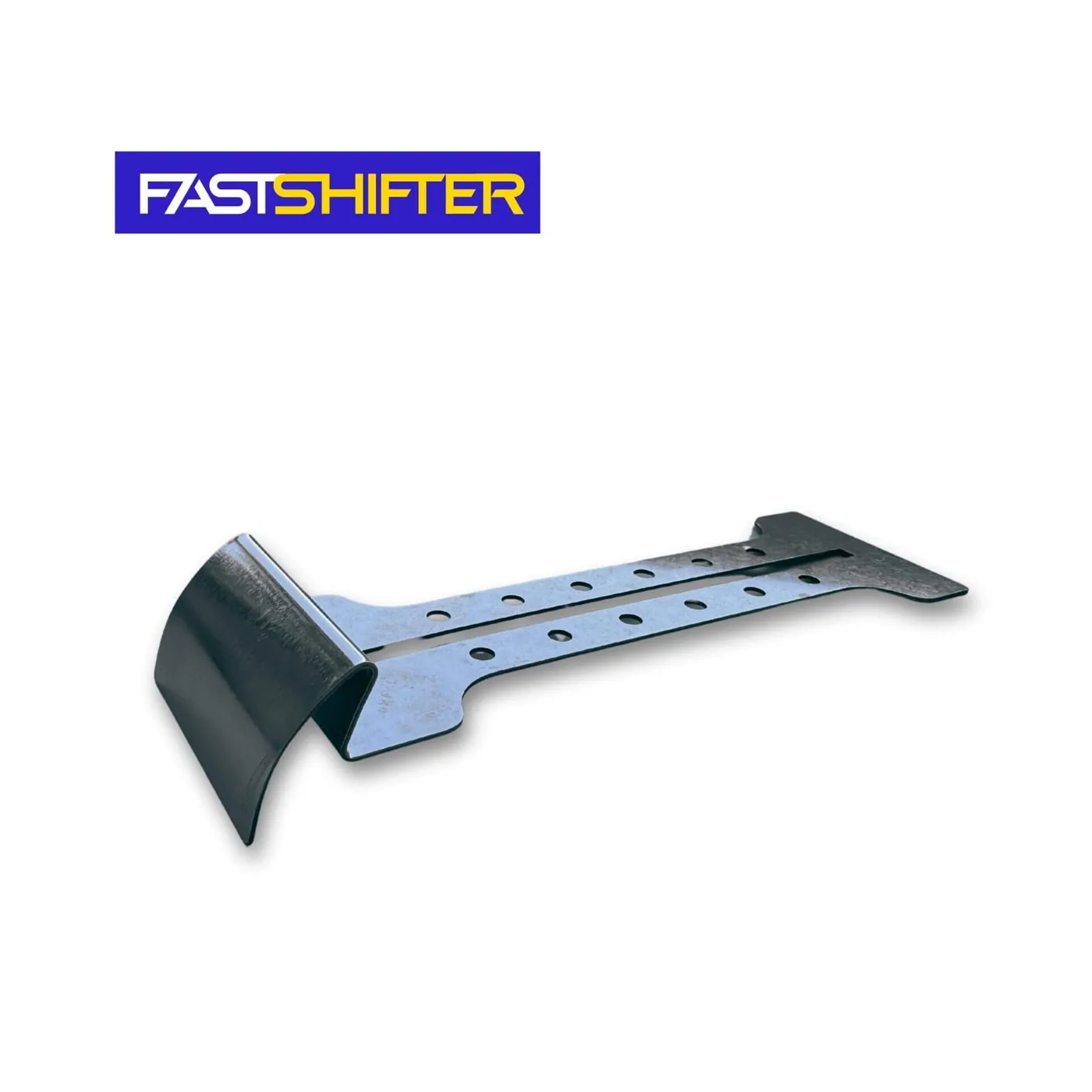
- The tile wall fixator restrains the row of tiles that meets a wall while allowing movement.
- The bottom tile holder and top tile holder carry a tile set vertically at the open edge, closing the void under the terrace with the same material as the surface.
Installation order
- Clean the base and lay out pads where the pedestals will stand.
- Start from the highest point of the base and set the pedestals to approximate height.
- Lay the field, letting each tile corner sit against the spacer tabs.
- Level as you go with a long straightedge and fine-tune individual pedestals from above.
- Cut perimeter tiles last and support every cut edge with an extra pedestal or a tile holder.
- Leave drains and outlets accessible under a removable tile.
Common mistakes
- Using tiles not approved for raised laying. Corners crack or tiles break under point loads.
- Skipping slope adjusters on a fall. The tiles rock or the corners chip.
- Leaving cut edges unsupported. Every cut tile needs its own support line.
- Ignoring the roof. On roof terraces, confirm imposed load, wind and membrane requirements with an engineer first.
For distributors and contractors
Fastshifter tile pedestals, spacers and edge accessories are designed in Europe as one system with the joist pedestals and foundations. To test them on a project, request samples or write to info@fastshifter.com.
Frequently asked questions
Can any porcelain tile be laid on pedestals?
No. On pedestals the tile spans freely between its corners, so it must be thick and strong enough for that. Use only tiles or slabs that their manufacturer approves for raised or pedestal laying, and follow their limits for format and load.
How many pedestals per m² for porcelain tiles?
About 4 per m² with 600 × 600 mm tiles, because each pedestal carries the corners of up to four tiles. Edges, corners and cut tiles add to that figure.
What joint width do Fastshifter tile pedestals give?
The heads of the FT tile pedestals have integrated 4 mm spacer tabs, so every joint comes out at 4 mm without measuring. Separate 4 mm pedestal spacers are also available.
Can the level be corrected after the tiles are laid?
Yes. The FT tile pedestals adjust by screw thread and can be fine-tuned after laying, so a single corner can be lifted and corrected without taking up the whole field.
How much load does one tile pedestal carry?
Each FT tile pedestal is rated up to 800 kg. In practice the tile itself, the base and the roof structure usually set the real limit, not the pedestal.