Long ground screws exist mainly to get below the frost-affected layer. Where the ground does not freeze, a short screw with a wide head can carry a light deck near the surface. Fastshifter Trident Drive is built for that: a 350 or 470 mm pile, driven in about a minute. On soft fill, steep slopes or heavy loads, use longer piles or ask an engineer.
A deck foundation in a cold climate has two jobs: carry the load and stay put through winter. The second job is why most ground screws for decks are 1–2 m long. In a region where the ground does not freeze, only the first job is left, and a much shorter foundation can do it.
Depth is mostly a frost question
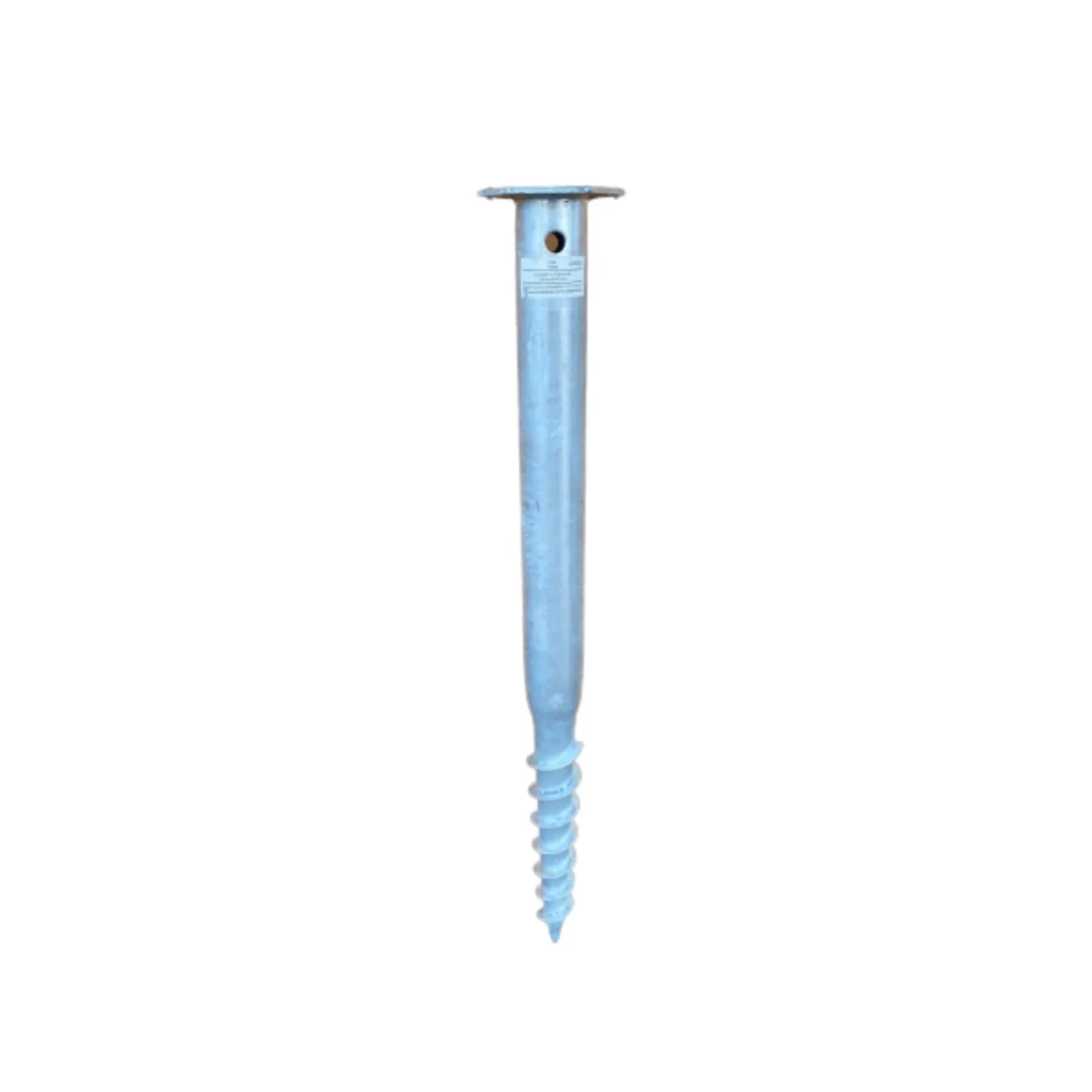
When wet soil freezes, it expands. A footing or screw sitting in that layer gets pushed upwards, unevenly, and the deck goes out of level. Builders in the north solve this by going deeper: concrete below the frost line, or long ground screws that anchor in the soil underneath. That is the logic behind lengths such as the 1600 mm Type M screws and the 2050 mm M24 version.
In lowland southern Europe and many coastal areas, the ground rarely or never freezes at depth. Check your local design frost depth first; altitude and distance from the sea change it fast. Where it is effectively zero, a 1.6 m pile under a garden deck is steel in the ground doing very little.
What a short screw needs instead
A short screw cannot rely on deep anchorage, so it has to spread the load near the surface. That means a wide head that bears on the soil and resists sinking, and a geometry that grips quickly in the top layer.
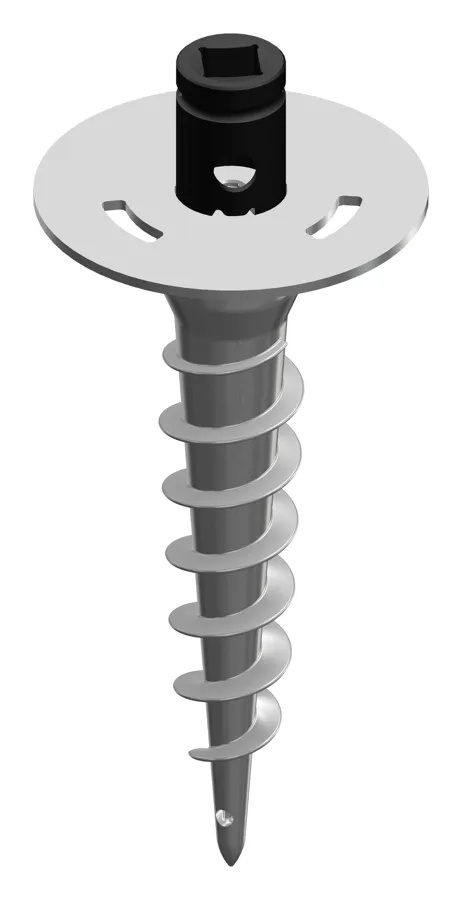
That is the brief behind the Fastshifter Trident Drive, an original design:
- Short shaft: 68 mm diameter, 470 mm or 350 mm long, hot-dip galvanised steel.
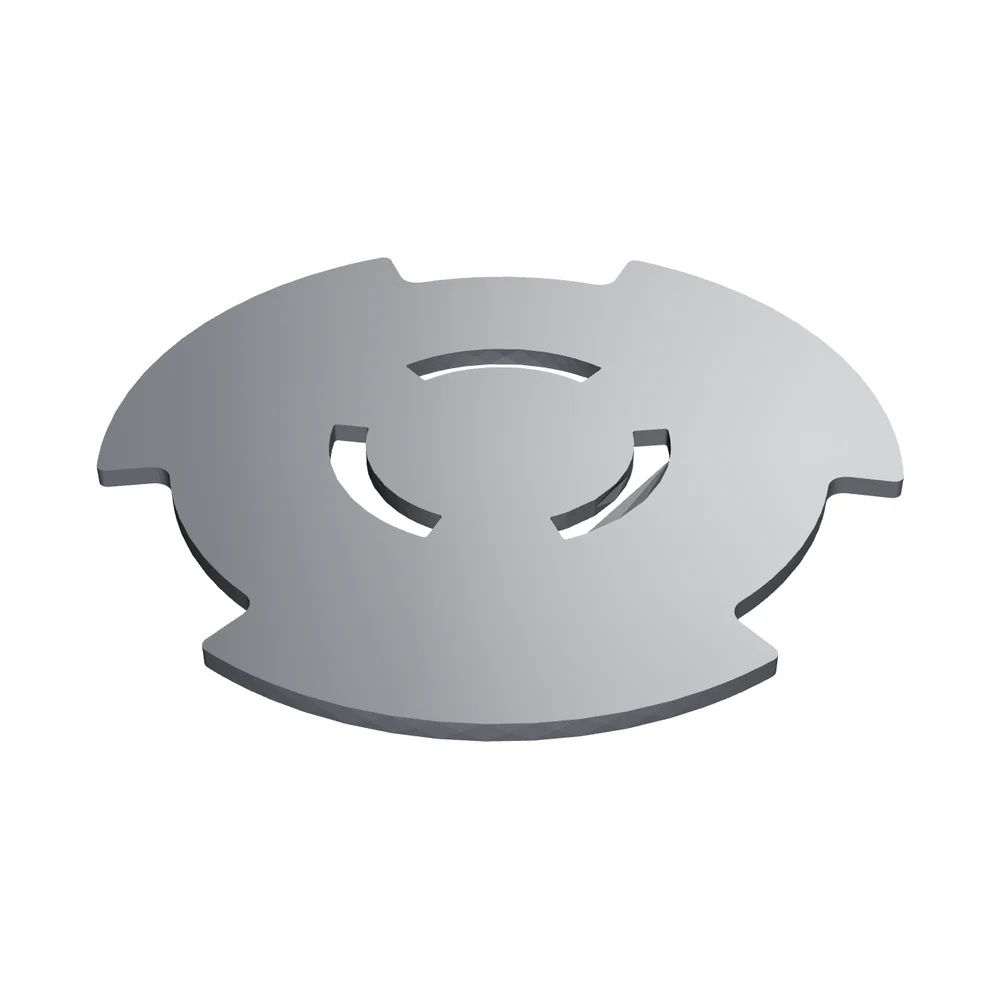
- Wide head: Ø180 mm on the deck version. A threaded rod screws into the head to carry the frame, or a pedestal sits on top.
- Ø120 head on the 350 mm version, made for garden lamp posts, bollards and other light fittings.
- Own drive system: a special adapter locks onto the head and the screw is turned in with a cordless impact driver of any make, or by hand.
- About a minute per screw with a cordless impact driver and the drive adapter (measured). No heavy machine, no concrete, no digging.
Where it fits
We would consider Trident Drive first for:
- garden decks and platforms on firm, natural soil in frost-free regions;
- ground-level decks where the frame sits close to the surface;
- sites with no machine access, such as rear gardens and courtyards;
- temporary or seasonal decks, since the screws can be backed out;
- light fittings and garden lamps around the deck, using the Ø120 version.
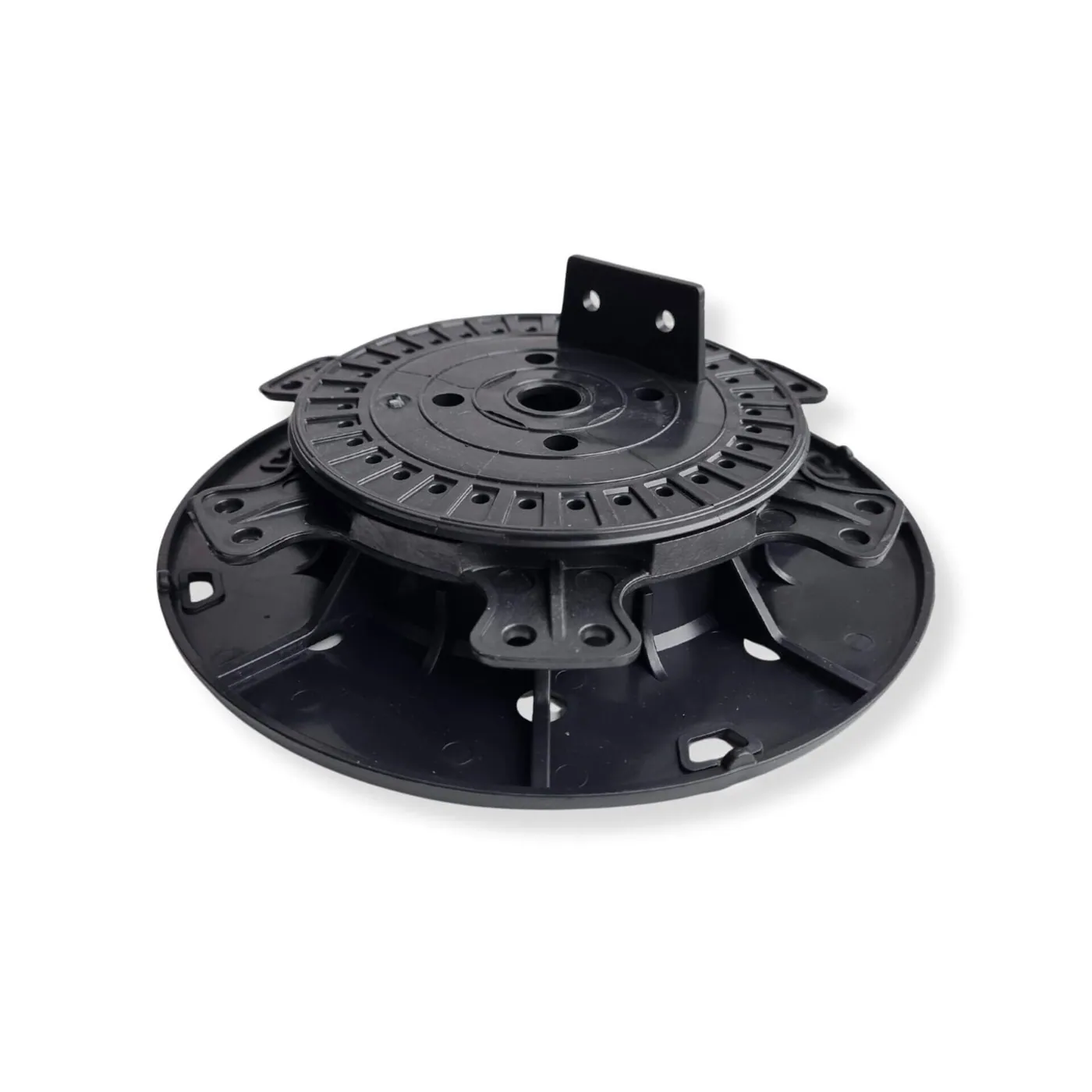
Combined with an adjustable pedestal on the Ø180 head, small level differences are taken up on site without cutting packers.
When not to use short screws
Short does not mean universal. These are the cases where we would not rely on a 470 mm screw.
Soft fill and made ground. On new-build plots, the top layer is often loose fill, rubble or topsoil spread over the original ground. A short screw ends in exactly the layer that settles. Use a longer pile, or an extension, to reach firm soil.
Slopes. On a sloping garden, the downhill supports stand proud of the ground and see more sideways load. A short pile has little embedment to resist it. Longer piles with extensions are the safer choice.
High loads. Hot tubs, planters full of wet soil, masonry kitchens, roofs and pergolas concentrate load. Without that figure for your soil, treat heavy point loads as an engineer’s question.
Organic or waterlogged soil. Peat and permanently wet clay give poor bearing near the surface at any length. Get advice.
Any frost at all. If your site sees ground frost, even occasionally, use a screw long enough for the local frost depth. See ground screws vs concrete footings.
Installing a Trident Drive screw
- Set out the grid with string lines, following the joist supplier’s span tables.
- Probe the soil at a couple of positions with a test screw. Stones, roots and fill show up quickly.
- Fit the adapter to the head and the impact driver.
- Start vertical. Check plumb in two directions as the screw starts to bite.
- Drive until the head sits firmly on the soil at the planned level. Do not overdrive and back out; that loosens the ground around the shaft.
- Fit the threaded rod or pedestal, set heights with a laser, then build the frame.
The quick check
- Frost-free, firm natural soil, light deck → short wide-head screw such as Trident Drive
- Soft fill, slope or heavy point loads → longer piles and extensions
- Ground frost, however rare → screw length to suit local frost depth
- Ground you must not dig into at all → a surface block base
Read next: why the substructure matters more than the boards.
Frequently asked questions
Why are standard deck ground screws 1–2 m long?
Mostly because of frost. In cold climates the top layer of soil freezes and expands, and a foundation sitting in that layer can be lifted. A long screw anchors in soil below it. Where the ground does not freeze, that reason disappears.
How long is a Trident Drive ground screw?
There are two versions, both with a 68 mm shaft and hot-dip galvanised: 68 × 470 mm with the Ø180 head for deck frames, and 68 × 350 mm with the Ø120 head for garden lamp posts and bollards.
Can I install Trident Drive without a machine?
Yes. It is turned in with a special adapter on a cordless impact driver, or by hand. No excavator, no concrete and no digging.
How do I know if my site is frost-free?
Check the design frost depth in your local building regulations or ask the local building authority. Lowland coastal areas in southern Europe are often frost-free, but altitude and inland location change that quickly.
How many Trident Drive screws does a deck need?
That depends on the frame layout, the joists and the soil. As a guide, plan about one screw per m² with a double joist layout; the exact number follows the spacing of the frame. Until that is confirmed for your project, plan the grid with your joist supplier's span tables.
Can a pedestal sit on top of a Trident Drive screw?
Yes. The Ø180 head takes either a threaded rod to carry a frame, or a pedestal set on top for fine height adjustment.