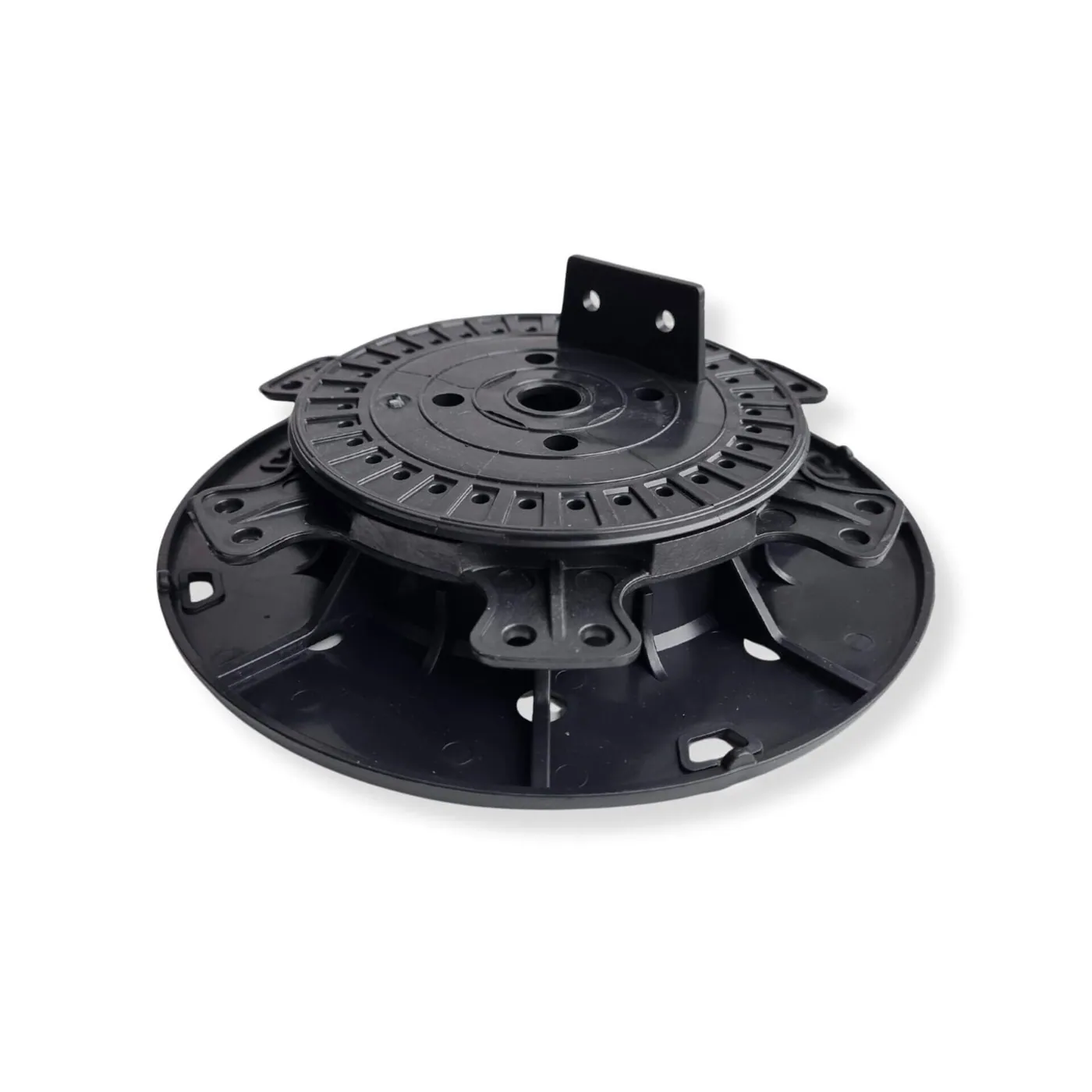
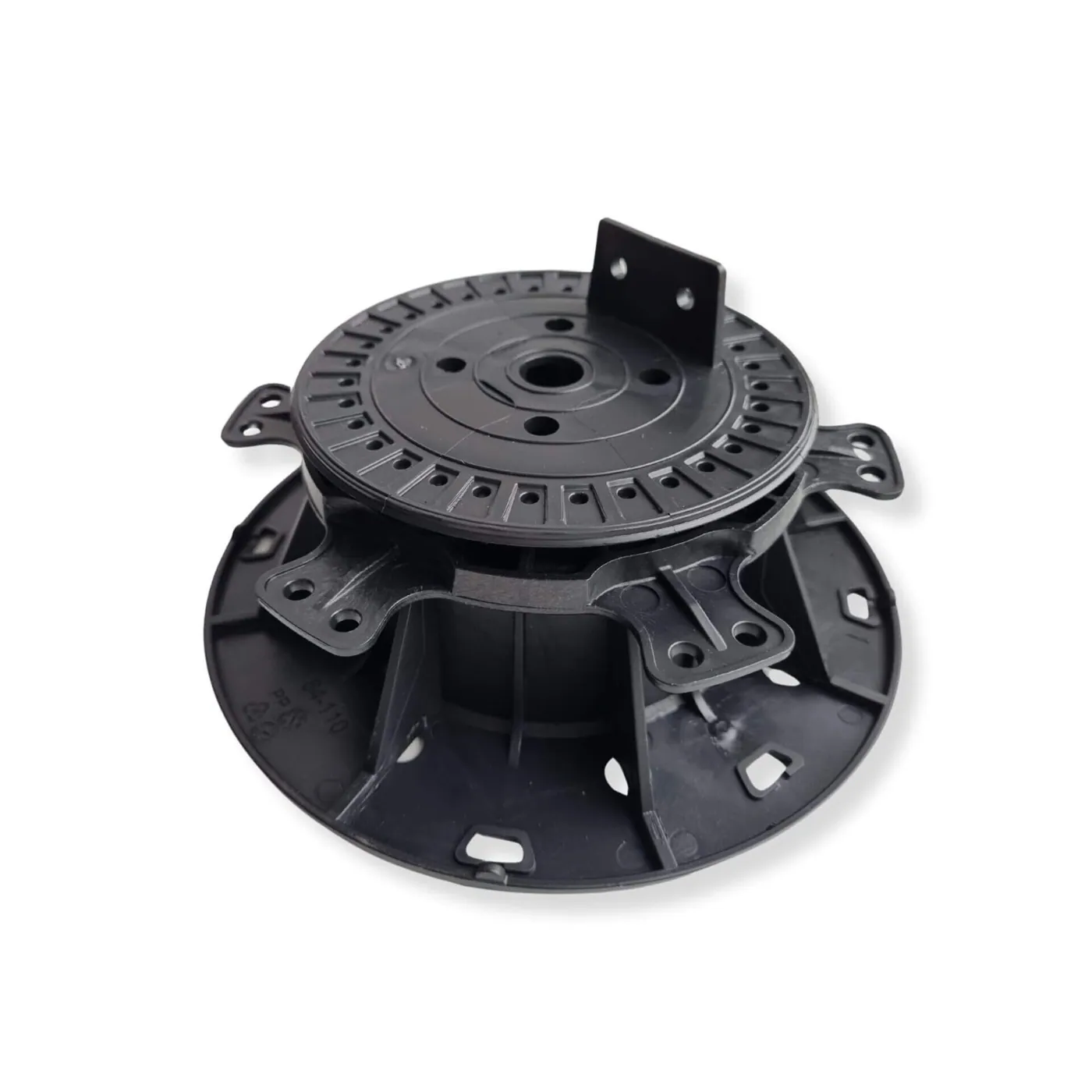
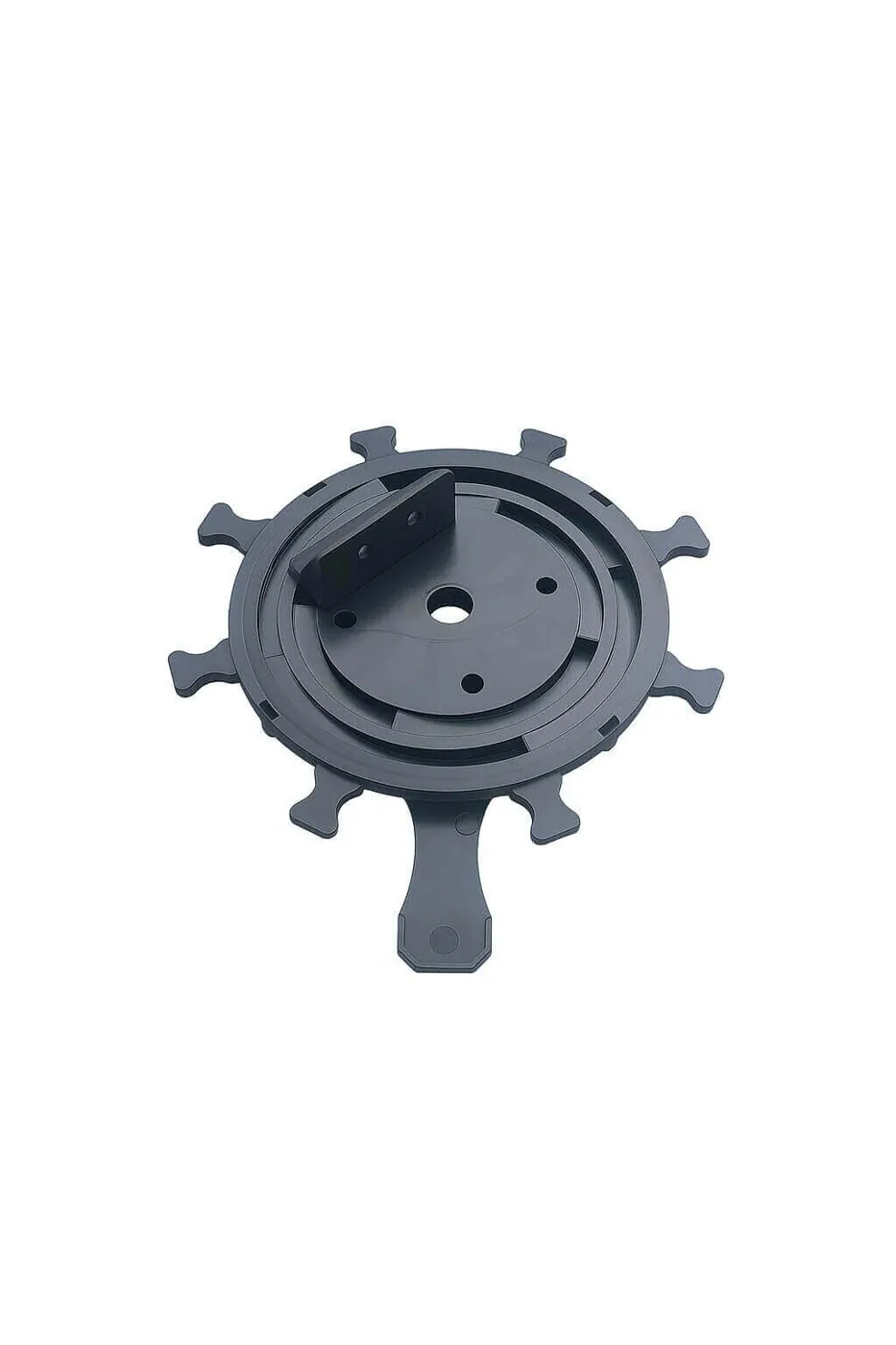
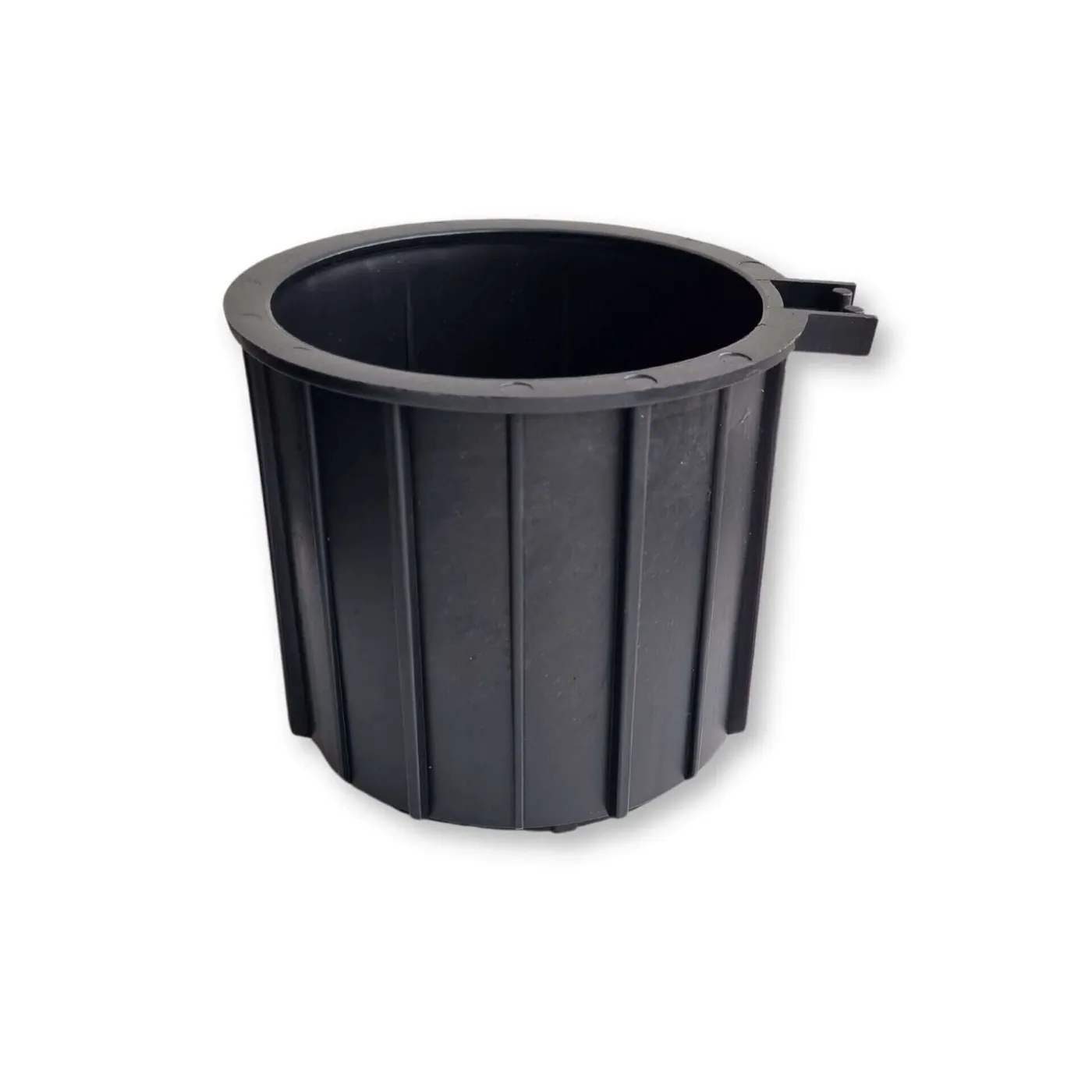
Where you cannot or should not dig, build the deck on the surface. Prepare a firm, level, free-draining base, set a Fastshifter Block at each support point, drop an FT adjustable pedestal into its centre and set the height. Each block weighs about 1 kg and carries up to 800 kg. It is not for soft ground, steep slopes or wind-exposed decks without extra fixing.
Most decks start with a hole: a footing, a pile, a post. Sometimes that hole is the one thing you cannot make. The answer then is to put the foundation on top of the ground instead of in it, and to prepare that ground properly.
Situations where digging is off the table
Over buried services. Drainage runs, water mains, gas and power cables often cross exactly where the client wants a deck. Driving a pile or digging a footing next to them is a real risk. A surface base puts nothing in the ground. Locate services first anyway, and keep supports off inspection chambers.
Rented land and temporary use. Tenants, holiday lets, restaurant terraces and event sites often cannot alter the ground. A base that lifts off and leaves no trace solves the contract question as well as the technical one.
Archaeology and heritage sites. On protected ground, any disturbance below the surface may need consent. Surface construction reduces disturbance, but it does not automatically remove the need to ask. Check before you order.
Tree root zones. Digging footings near a mature tree cuts roots and can harm the tree. Building on the surface avoids cutting, although compaction and a closed surface still affect roots. Keep the build-up open and ask an arborist where the tree is protected or valuable.
Compacted gravel and old hardstanding. A gravel yard or old driveway is already a decent base, but a screw cannot be driven through it and a footing means breaking it up. Here a surface base is often simply the fastest option.
How the Block system goes together
The Fastshifter Block is an original design: a single cast base made for decking, not borrowed from another trade.
- Place the block on the prepared ground at each support point. No digging. It weighs about 1 kg, so one person carries a stack.
- Drop an FT adjustable pedestal into the centre seat, so every support is centred on its base.
- Set the height by turning the pedestal. FT joist pedestals run from 10 mm (FT0) to 302 mm (FT6), and a 100 mm extension adds more.
- Lay the joists and fine-tune the level from above.
Each block carries up to 800 kg (tested), the same rating as the FT pedestals. Blocks nest inside one another for transport, which keeps pallets compact. There is no Block product page yet; see the products overview or ask us about it.
Preparing the ground
The block spreads load. It cannot fix a bad base. The preparation follows normal paving practice:
- Strip vegetation and organic topsoil under the deck area. Grass and humus rot, settle and hold water.
- Level and compact the formation. Soft spots found now are cheap to fix.
- Lay a geotextile to stop weeds and to keep the base material separate from the soil below.
- Add compacted granular material such as crushed stone.
- Give it a slight fall so water runs off and out from under the deck, not towards the house.
- Check the block positions against the joist layout before placing them.
On existing gravel or hardstanding, check it is firm all over. Rake out loose material and re-compact soft areas.
How many supports?
The pedestal count is set by the joist layout. As a guide for FT pedestals: about 1 per m² with a double joist layout, and 3–3.5 per m² with a single joist layout. One block goes under each pedestal. The full calculation is in how many pedestals per m².
Honest limits
A surface base is not the answer everywhere.
- Soft, organic or waterlogged ground. If the soil cannot carry load near the surface, no base sitting on it will either. A ground screw or footing reaching firmer soil is the right tool.
- Steep slopes. Block bases are for level or gently sloping ground. On a real slope, downhill supports get tall and the sideways load grows. Use ground screws with extensions.
- Wind uplift. A 1 kg block holds nothing down. The deck stays put by its own weight. On roofs, exposed coasts and raised decks, have uplift checked and add ballast or fixing.
- Heavy point loads. Hot tubs and masonry need a design check whatever the base.
- Frost-susceptible soils in cold climates can heave under a surface base. A free-draining granular layer reduces the risk; it does not remove it.
Where the base is a slab, roof or balcony rather than soil, see pedestal decks on roofs, balconies and slabs.
Read next: deck foundations in regions without ground frost.
Frequently asked questions
Can I build a deck without digging any foundations?
Yes, on a firm and well-prepared surface. A block base spreads each support's load over the ground, and an adjustable pedestal on top levels the frame. The ground preparation does the work that a footing would otherwise do.
How much load does a Fastshifter Block carry?
Up to 800 kg per support, tested. That matches the FT joist pedestals that sit in it, which are rated up to 800 kg each. The actual capacity of the support also depends on how firm the ground underneath is.
Can I put a deck over a drain or cable run?
Often, yes, because nothing goes into the ground. Keep supports off inspection chambers, leave access hatches in the deck above them, and check with the utility owner if there are rules about loading over their service.
Do I need planning or consent for a surface deck near trees or on protected land?
That depends on local rules. Protected trees and archaeological or heritage sites can be covered by restrictions even when nothing is excavated. Ask the local authority before you start.
Will a deck on blocks blow away?
A block deck relies on its own weight. A ground-level deck in a sheltered garden is usually fine, but on exposed sites, roofs or raised decks, check wind uplift and add ballast or fixing where needed.
Can I take a block deck with me when I move?
Yes. Nothing is cast or driven, so blocks, pedestals and frame can be lifted and reused. That is one reason it suits rented gardens.