Use a hardened, self-drilling screw made for aluminium, such as the Fastshifter SS410 4.2 × 38 mm joist screw: it drills the joist wall without pre-drilling. Lay a soft joist tape between board and aluminium to separate the materials and damp noise. Leave room for movement at joist ends. In dense hardwood or on the coast, follow the frame maker's fixing.
Aluminium joists do not rot, stay straight and are easy to carry onto a roof. They have become the default frame for balconies and roof terraces, and are common at ground level too. The catch is at the fixing: a screw that works perfectly in timber is the wrong tool in metal.
Why ordinary deck screws fail in aluminium
A wood screw relies on its point and thread to push into fibres. In aluminium there are no fibres to push aside. The point skates over the surface, the thread strips the thin wall, or the screw snaps under the driver. Pre-drilling every hole in metal works but costs time on every board.
The fix is a screw built for the job: hard enough to drill its own hole in the joist wall, then hold the board down.
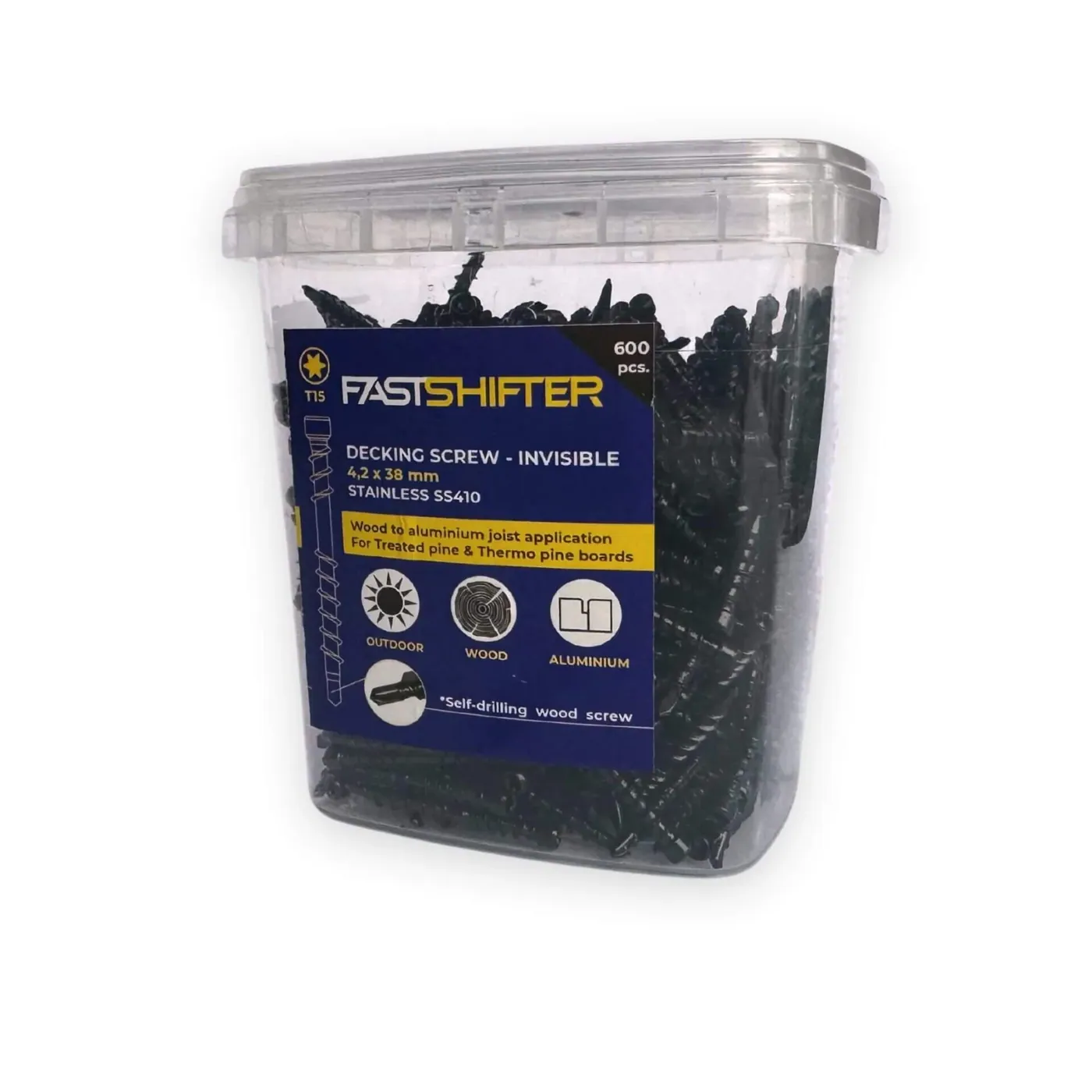
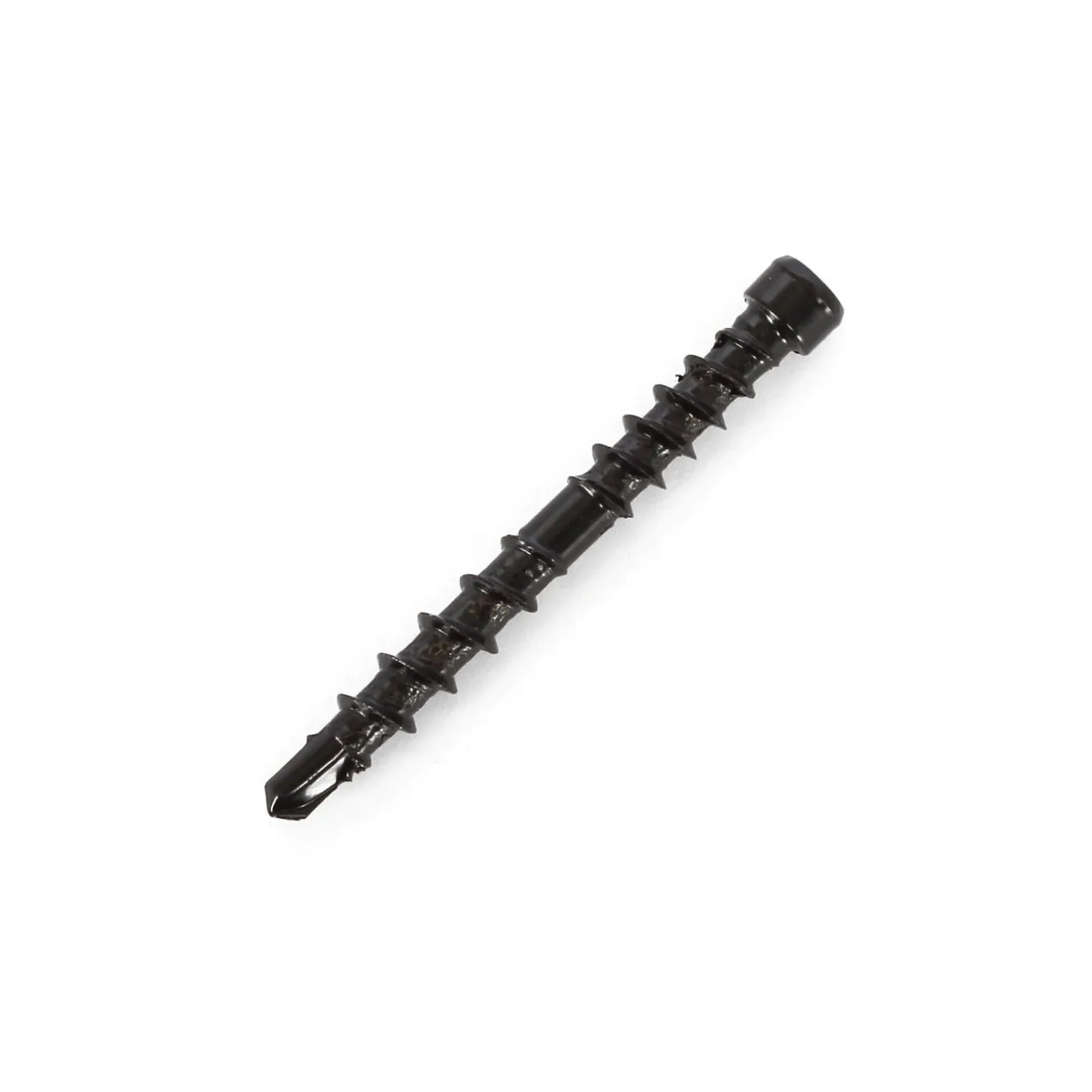
The screw: SS410 4.2 × 38 mm
The Fastshifter screw for aluminium joists is made for timber and WPC decking on aluminium substructures:
- Self-drilling tip that cuts through the aluminium wall, so no pre-drilling of the joist.
- SS410 stainless steel, hardened, with a black coating.
- Double thread for a firm board-to-joist connection.
- Conical head for a neat finish, and a tip that leaves fewer splinters at the board edge.
- 4.2 × 38 mm, matched to standard aluminium joist profiles. T15 drive.
- Packs of 600, or single pieces for samples and repairs.
The limit to know. The hardness that lets SS410 drill aluminium also makes it a poor match for larch and dense hardwoods, where it is less suitable than A2 or A4. It is also less corrosion resistant than A2 or A4. Near the sea, by pools, or with tannin-rich hardwood on an aluminium frame, use the fixing the frame or board maker specifies. More on grades in A2, A4, C4 or SS410.
Tape: a separator, not rot protection
On timber, joist tape is there to keep water out of the top face. Aluminium does not rot, so the job changes:
- Separation. It keeps the board, and the moisture it holds, off the metal.
- Noise. A soft layer damps footfall and the drumming that hollow profiles can produce. This matters most on balconies and decks over rooms.
- Board slip. A tape with grip helps reduce small movements between board and joist.
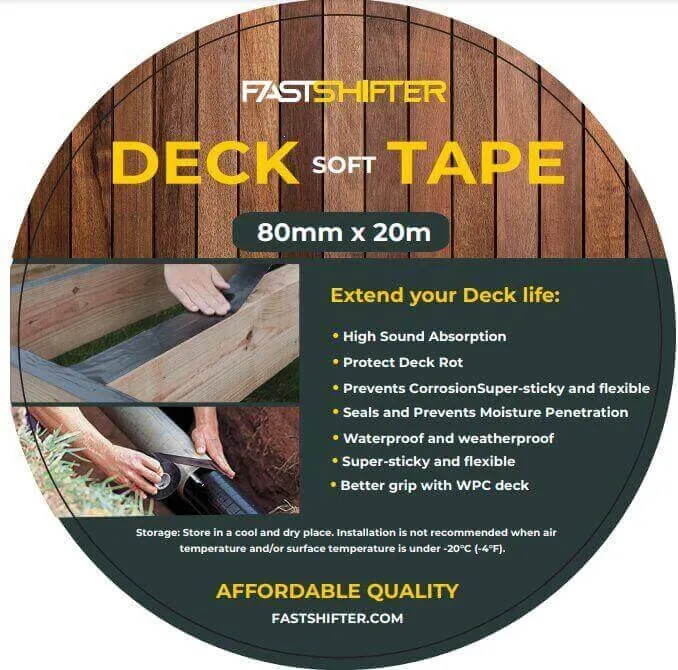
The Deck Soft Tape 80 mm has a cushioning core and is rated for timber, aluminium and steel joists. Apply it to a clean, dry profile and screw straight through it.
Hidden screws or clips?
The choice works the same way as on timber, with one difference: whatever goes into the joist must drill metal.
- Ungrooved timber boards. Hidden fixing through the board edge, using the self-drilling joist screw, gives a clean surface with no visible heads.
- Grooved boards, especially composite. Use the board maker’s clip system. The clips sit in the groove and are screwed down into the aluminium with a self-drilling screw. Many composite warranties depend on using the specified clip.
- Face fixing is possible too, but the screw still has to drill aluminium, so use a screw made for metal.
The full comparison is in hidden deck screws vs face screws vs clips.
Thermal movement
Aluminium expands and contracts with temperature more than timber does along its length, and a dark joist in full sun gets hot. Over a long run that movement adds up. Good practice:
- leave a gap where joists butt end to end, as the frame maker specifies;
- do not lock long joists rigidly at both ends against walls or upstands;
- keep the normal board gaps for drainage and airflow; see deck board gaps and ventilation.
Aluminium joists on pedestals
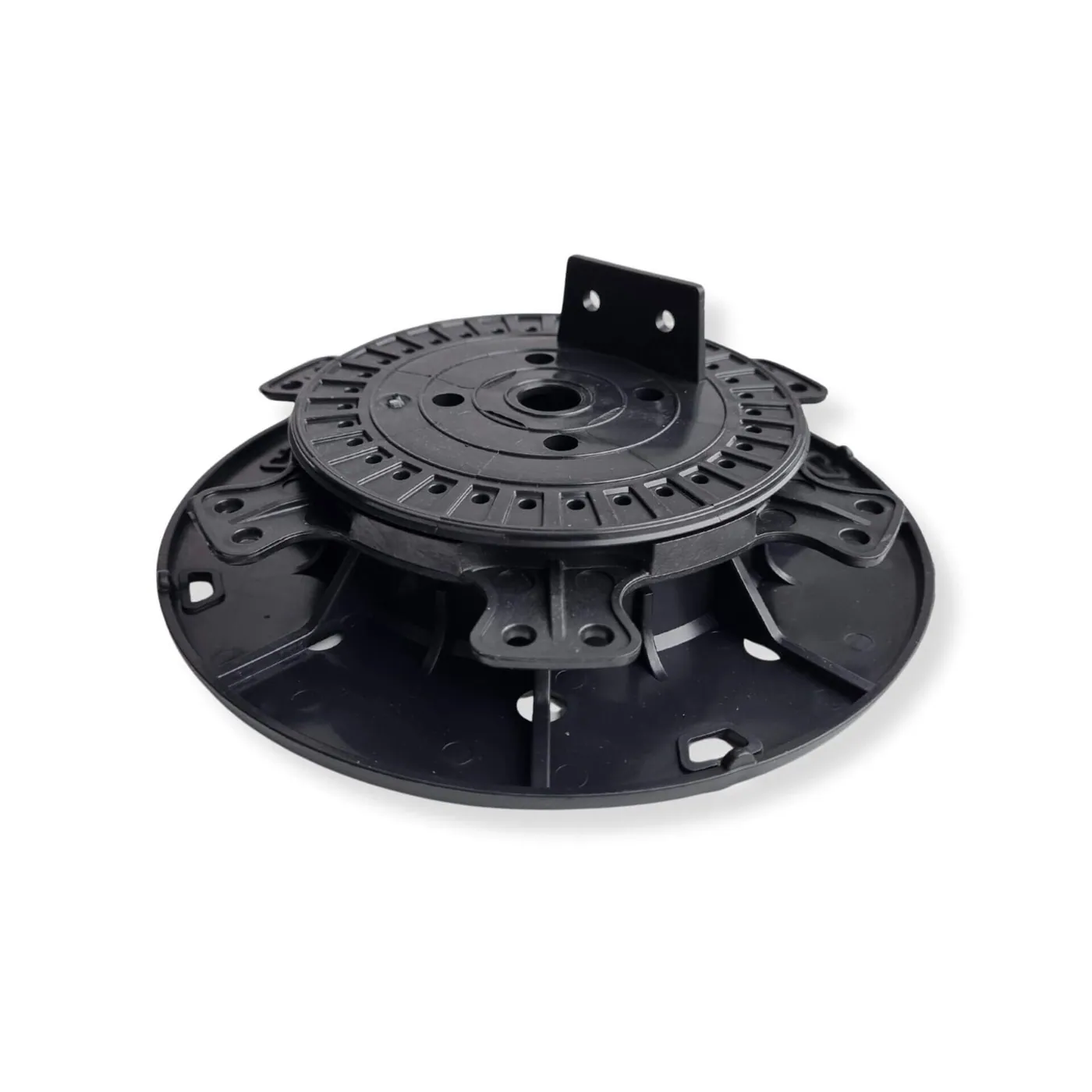
On slabs, roofs and balconies, aluminium joists usually sit on adjustable pedestals. The FT joist pedestals, such as the FT3 40–64 mm, are made for timber and aluminium joist substructures and are rated up to 800 kg each. For pedestal counts, see how many pedestals per m².
A clean fixing sequence
- Set the pedestals and level the aluminium joists.
- Tape the top of each joist.
- Set the first board against a string line.
- Use spacers for an even gap.
- Drive the self-drilling screw with a T15 bit. Let the tip drill; do not force it.
- Stop when the board is pulled down. Overdriving strips the hole in thin metal.
- Check every few boards that the line is still straight.
Mistakes we see
- Wood screws in metal joists, then pre-drilling half the deck to rescue it.
- SS410 in oak or tropical hardwood without checking for a suitable fixing.
- No tape on a balcony deck, then complaints about noise below.
- Joists butted tight end to end in full sun.
Read next: why the substructure matters more than the boards.
Frequently asked questions
Can I use normal decking screws on aluminium joists?
No. Wood screws are not made to drill through metal. They wander, strip or snap. Use a self-drilling screw designed for aluminium, such as the SS410 4.2 × 38 mm joist screw.
Do I need to pre-drill aluminium joists?
Not with a self-drilling screw. The tip of the SS410 joist screw is designed to cut through the aluminium wall. Dense hardwood boards may still need a pilot hole through the board.
Is SS410 suitable near the sea?
SS410 is a hardened stainless steel, chosen for drilling strength. It is less corrosion resistant than A2 or A4, and heads may show light surface rust over time. On the coast or by pools, use the fixing specified by the frame manufacturer.
Do aluminium joists need joist tape?
Not against rot, but it still helps. Tape separates the board and fixings from the metal, damps footfall noise and reduces board slip. A soft tape that is rated for aluminium joists works well.
Can I use hidden clips on an aluminium frame?
Yes, with grooved boards. The clips are screwed to the aluminium joist with a self-drilling screw. Use the clip system the board maker specifies, especially for composite boards under warranty.
Which screw length for aluminium joists?
The Fastshifter joist screw is 38 mm long, matched to standard aluminium joist profiles. Check that the screw engages the joist wall fully for your board thickness and profile.